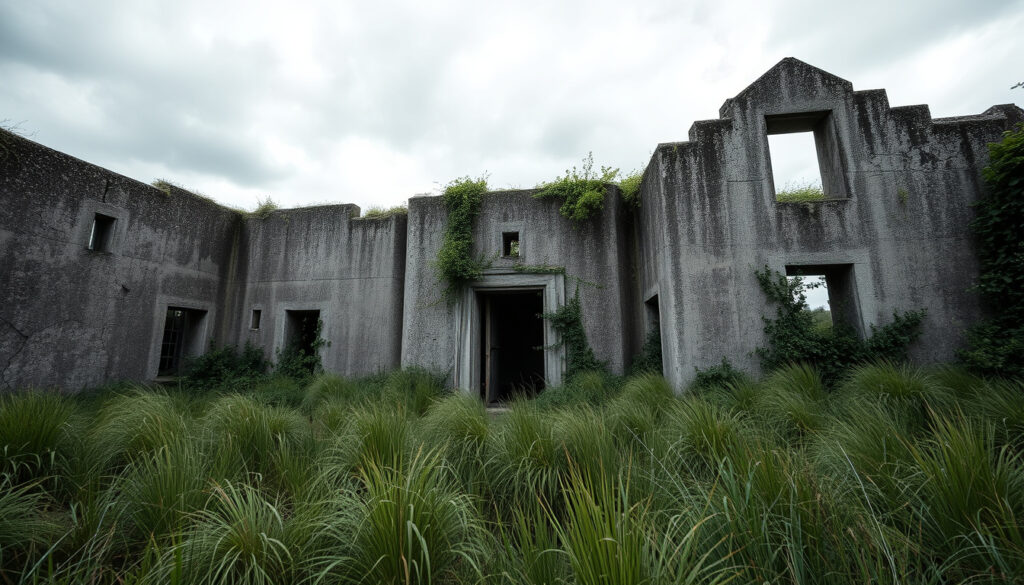
Tuam Mother and Baby Home – Scandal Facts Timeline and Findings
The Tuam Mother and Baby Home scandal stands as one of Ireland’s most disturbing revelations about the treatment of unmarried mothers and their children during the twentieth century. Located in County Galway, the institution operated from 1925 to 1961 under the management of the Bon Secours Sisters, becoming synonymous with high infant mortality rates and the apparent disappearance of hundreds of children without proper burial records. The case came to public attention through the persistent research of a local amateur historian who uncovered a stark discrepancy between recorded deaths and registered burials, prompting a national inquiry that would reshape understanding of Ireland’s institutional history.
A Commission of Investigation established by the Irish government confirmed that approximately 796 children, predominantly infants under one year of age, died at the Tuam facility during its operational years. The Commission’s findings, published in final form in October 2020, documented human remains at the site but clarified that these were located within structured chambers of a former septic system rather than a single mass grave as initially reported. Today, ongoing exhumation efforts seek to identify and respectfully reinter those who died, bringing a measure of closure to survivors and relatives still grappling with decades of silence.
What is the Tuam Mother and Baby Home?
The Tuam Mother and Baby Home, officially known as St. Mary’s Mother and Baby Home, was a residential institution operated by the Bon Secours Sisters in Tuam, County Galway, Ireland. It operated from 1925 until 1961, serving as a facility where unmarried pregnant women were sent to give birth away from their communities. The institution formed part of a broader network of mother and baby homes that existed across Ireland during a period when societal attitudes toward unmarried mothers were marked by severe stigma and moral judgment.
Who Ran the Home?
The Bon Secours Sisters, a Catholic religious order, operated the Tuam facility throughout its existence. The order, whose name translates from French as “good help,” established several hospitals and care institutions across Ireland. In the context of the Tuam home, the Sisters provided basic accommodation and care for mothers and their children, though historical records indicate that resources were consistently inadequate to meet the needs of residents. The Catholic Church broadly endorsed and supported such institutions, which operated with minimal state oversight during much of their operational period.
Location and Operation Period
The institution was situated on the outskirts of Tuam town, occupying a complex that included residential buildings and associated structures. Over its 36 years of operation, the home admitted thousands of women and children. Population figures fluctuated considerably, but at certain periods the facility housed hundreds of residents simultaneously. The institution closed in 1961, with residents transferred to other institutions or discharged, though many former residents report that the circumstances of their departure remained unclear for decades afterward.
Operated from 1925 to 1961. Run by the Bon Secours Sisters. Approximately 796 children died during operation. The Commission confirmed remains in 20 separate chambers beneath the site.
- Unmarried mothers and their children formed the primary resident population
- Infants under one year represented approximately 80% of recorded deaths
- Only 2 burials were registered in local graveyards despite hundreds of deaths
- The home operated without meaningful regulatory oversight for most of its history
- Ireland had the world’s highest rate of sending unmarried mothers to such institutions
| Fact | Details |
|---|---|
| Location | Tuam, County Galway, Ireland |
| Operating period | 1925–1961 |
| Management | Bon Secours Sisters (Catholic religious order) |
| Children who died | Approximately 796 |
| Mortality rate | Nearly 25% of all residents |
| Site structure | 20 chambers within former septic system |
| Registered burials | Only 2 in local graveyards |
How Many Babies Died and What Happened There?
The death toll at the Tuam Mother and Baby Home emerged as one of the most troubling aspects of the scandal. During the home’s operational years, death certificates were issued for approximately 796 children, predominantly infants under the age of one year. This figure represented a mortality rate approaching 25% of all residents who passed through the institution, substantially higher than national averages for comparable age groups during the same period. The scale of deaths stood in stark contrast to burial records, which showed only two registered interments in local graveyards.
Reported Death Toll
The stark disparity between recorded deaths and documented burials first came to light through the research of local historian Catherine Corless. Working from 2012 onward, Corless examined death registration records and discovered that hundreds of children from the home had received official death certificates yet left no trace in church or civil burial records. Her findings suggested that the unaccounted remains had been interred somewhere on the institutional grounds, leading her to estimate that an unmarked burial ground existed near a former septic tank on the property. The research revealed a pattern of deaths spanning the home’s entire operational period, with particularly high numbers in certain years.
Discovery of Remains
When Catherine Corless published her findings in local newspapers and later through broader media coverage in 2014, the revelations sparked immediate public outrage. Taoiseach Enda Kenny publicly described the home as a “chamber of horrors,” and the case generated international headlines. The subsequent Commission of Investigation conducted archaeological surveys at the site, employing ground-penetrating radar and other geophysical techniques. These investigations confirmed the presence of human remains, though in a configuration that differed from initial media reports. The remains were found within 20 distinct chambers forming part of the structural remains of a former septic system, rather than in a single mass grave within a sewage tank as had been widely reported.
The Commission established that remains were located within structured chambers of a disused septic system, not within an active sewage tank. This distinction is significant because media coverage often referred to a “sewage tank mass grave,” which the investigation did not confirm.
Causes of High Mortality
The Commission attributed the excessive death rates to a combination of systemic failures and neglect. Residents lived in overcrowded conditions with inadequate nutrition, insufficient medical care, and poor sanitation. Many infants entered the institution already weakened by circumstances related to their mothers’ health and social circumstances. Disease spread readily in such environments, claiming young lives that might have been saved with proper resources. The Commission’s report identified institutional conditions as fundamentally incompatible with proper child development, noting that mortality rates at Tuam far exceeded those in other comparable institutions and in the general population.
Timeline of the Tuam Scandal
The path from institutional operation to public awareness and official inquiry unfolded over several decades, with key moments accelerating the process toward truth and accountability. Understanding the sequence of events helps contextualize both the delay in exposing conditions at the home and the subsequent governmental response.
- 1925: St. Mary’s Mother and Baby Home opens in Tuam under Bon Secours Sisters management.
- 1961: The institution closes following transfers of remaining residents to other facilities.
- 2010–2014: Local historian Catherine Corless publishes research documenting the discrepancy between recorded deaths and registered burials.
- June 2014: Following Corless’s findings gaining international attention, Taoiseach Enda Kenny announces a government investigation.
- February 2015: The Commission of Investigation into Mother and Baby Homes is formally established with three members.
- 2017: Preliminary findings confirm human remains at the Tuam site.
- October 2020: The Commission publishes its final report documenting conditions across 18 institutions.
- June 2023: Minister Roderic O’Gorman announces formal exhumation plans based on geophysical surveys identifying remains in 20 chambers.
- 2024: Excavation work begins under the statutory framework established to enable respectful recovery of remains.
What Happened to Survivors and Victims’ Families?
For those who lived through the Tuam Mother and Baby Home and for families searching for answers about relatives who died there, the decades following the institution’s closure brought continued uncertainty. Many survivors reported that their time at the home remained a source of shame and silence, rarely discussed even with close family members. The revelation of what had occurred at the site transformed private pain into public scandal, validating long-held suspicions while simultaneously reopening wounds that had never properly healed.
Survivor Testimonies
Former residents who came forward following the scandal’s emergence described conditions of neglect and deprivation that had been dismissed or ignored for generations. Testimonies detailed inadequate feeding schedules, medical neglect, and emotional hardship that accompanied life in the institution. Several survivors reported that they were effectively surrendered for adoption as children, losing contact with their mothers and siblings. The experience left lasting psychological impacts that many survivors struggled to articulate even to mental health professionals. Their voices proved essential in establishing the human cost of institutional failure and in demanding accountability from those responsible.
Government Redress and Recognition
The Irish government established a formal redress scheme to acknowledge the harm inflicted upon survivors of mother and baby homes. This framework provided for financial compensation and recognition of the institutional failures that characterized these facilities. Galway County Council offered official apologies for oversight failures, while the Taoiseach delivered parliamentary apologies acknowledging state complicity in the system that had enabled such institutions to operate with impunity. The Bon Secours order contributed to compensation funds and pledged participation in restorative schemes, though critics argued that contributions fell short of what was required for genuine accountability.
As of 2024, exhumation work continues at the Tuam site under government oversight. DNA identification efforts aim to establish connections between recovered remains and surviving family members where possible. A permanent memorial to those who died remains under consideration, with survivor groups actively consulted on appropriate forms of commemoration.
What the Commission of Investigation Found
The Commission of Investigation into Mother and Baby Homes represented the most comprehensive examination of Ireland’s institutional care system ever conducted. Chaired by Judge Yvonne Murphy with Dr. William Duncan and Professor Mary E. Daly, the Commission examined records and testimony relating to 18 separate institutions operating from 1922 through 1998. Its final report, published in October 2020, documented a system characterized by systemic neglect, inadequate oversight, and the devaluation of vulnerable women and children.
Beyond documenting conditions at Tuam specifically, the Commission’s findings revealed that approximately 9,000 children died across the institutions examined, representing an overall mortality rate of about 15%. The report attributed these deaths to a combination of poor nutrition, inadequate medical care, overcrowding, and institutional cultures that prioritized concealment over transparency. It explicitly blamed failures by both the state and religious orders for creating and maintaining conditions that made such mortality inevitable. The document also acknowledged that Ireland had possessed the world’s highest rate of sending unmarried mothers to such institutions, reflecting the particular intensity of social stigma that characterized Irish society during the relevant period. The report also acknowledged that Ireland had possessed the world’s highest rate of sending unmarried mothers to such institutions, reflecting the particular intensity of social stigma that characterized Irish society during the relevant period, and for more information on the Tuam Mother and Baby Home, please visit Lord of the Rings characters.
Clarifying Facts and Uncertainties
The Tuam case generated significant media attention and, with it, various claims that required verification through official investigation. Understanding what has been definitively established versus what remains uncertain helps frame ongoing discussions about the scandal and its implications.
| Established Information | Information That Remains Unclear |
|---|---|
| 796 death certificates were issued for children from the home between 1925 and 1961 | The precise identification of individual remains |
| Human remains were confirmed present at the site in structured chambers | Whether all 796 individuals who received death certificates are represented among recovered remains |
| Only 2 burials were registered in local graveyards | The specific causes of death for individual children in most cases |
| Remains were located in a former septic system structure, not within an active tank | The full extent of involvement by individual staff members or orders beyond institutional leadership |
| Mortality rates significantly exceeded national averages for comparable age groups | The complete chain of custody and record-keeping that led to missing burial documentation |
| The Bon Secours Sisters operated the facility throughout its operational period | Whether all remains at the site can be successfully identified through available DNA comparison methods |
The Broader Context of Mother and Baby Homes in Ireland
The Tuam scandal did not occur in isolation but represented the most visible manifestation of a broader system of institutional care that operated across Ireland for most of the twentieth century. Mother and baby homes existed in various forms throughout the country, accommodating women whose pregnancies resulted from relationships considered illegitimate by prevailing social and religious standards. The institutions were endorsed and supported by the Catholic Church, which wielded enormous moral authority in Irish society, and operated with varying degrees of state involvement and oversight.
These homes formed part of a wider network that included Magdalene laundries, industrial schools, and foster care systems, each addressing different categories of “unwanted” or “problematic” individuals according to the moral frameworks of the time. Many residents of mother and baby homes were subjected to forced adoptions, with their children given to other families often with the active participation of religious orders. The system reflected societal attitudes that prioritized institutional reputation and family honor over the welfare of women and children, resulting in practices that caused immense suffering and whose consequences continue to affect survivors and their descendants today.
Official Responses and Acknowledgments
The revelation of conditions at Tuam prompted responses from multiple institutions and officeholders whose statements ranged from expressions of regret to formal apologies. These acknowledgments proved significant in establishing official recognition of what had occurred, though critics argued that language sometimes minimized responsibility.
The Commission’s report documents a profound wrong inflicted by the State, by the churches, by institutions and by individuals on the women and children who found themselves in our Mother and Baby Institutions.
From the Final Report of the Commission of Investigation into Mother and Baby Homes
Galway County Council formally apologized for the failure of local oversight to prevent the conditions documented at Tuam. The Bon Secours order, which had initially hired a public relations consultant to contest early media characterizations, later issued statements acknowledging failures of human dignity and contributing to compensation schemes. Irish bishops offered apologies for the Church’s involvement in both the operation of such homes and the forced adoption practices that accompanied them. The official apologies, while welcomed by survivor groups, were often accompanied by calls for more substantive actions including enhanced compensation and comprehensive archival access.
Key Takeaways
The Tuam Mother and Baby Home case represents a foundational moment in Ireland’s reckoning with its institutional history. Approximately 796 children died at the Bon Secours-run facility between 1925 and 1961, with remains subsequently discovered in 20 chambers beneath the site. The Commission’s investigation confirmed the existence of human remains while clarifying that these were located within a structured former septic system rather than a mass grave within an active tank as initially reported. Ongoing exhumations seek to identify remains and provide information to surviving family members, while formal apologies from government and religious institutions acknowledge responsibility for the systemic failures that made such mortality possible.
For those researching similar stories of institutional care across Ireland, understanding the broader context of mother and baby homes may prove valuable. Local property markets also reflected the demographic shifts that accompanied changing attitudes toward institutional care, as seen in patterns of housing availability in areas like Naas that saw population movements during the relevant period.
What did the Mother and Baby Homes Commission find?
The Commission documented approximately 9,000 child deaths across 18 institutions from 1922–1998, with a 15% overall mortality rate. At Tuam specifically, nearly 25% of residents died. It confirmed human remains at Tuam in structured chambers of a former septic system, not a tank grave.
Why were mortality rates so high at Tuam?
The Commission attributed high mortality to poor nutrition, inadequate medical care, overcrowding, and institutional neglect. Conditions were incompatible with proper child development, and Ireland’s exceptionally high rate of sending unmarried mothers to such homes contributed to the problem.
What is the latest on Tuam babies exhumations?
In June 2023, the government announced exhumation plans following geophysical surveys confirming remains in 20 chambers. By 2024, excavation began under statutory authority to recover remains respectfully for identification and reinterment.
Where exactly are the remains located?
The remains are located in 20 distinct chambers forming part of the structural remains of a former septic system at the Tuam site. This configuration differs from media reports of remains within an active sewage tank.
Who ran the Tuam Mother and Baby Home?
The Bon Secours Sisters, a Catholic religious order, operated the home throughout its existence from 1925 to 1961. The order has since acknowledged failures and contributed to survivor compensation schemes.
How did the scandal come to light?
Local historian Catherine Corless discovered that 796 death certificates were issued for children from the home but only 2 burials registered in local graveyards. Her research, published from 2010 onward, led to global attention and ultimately a government commission of investigation.
What happened to survivors of the Tuam home?
Survivors received state recognition through formal redress schemes, including financial compensation. Many survivors provided testimonies that proved essential in documenting conditions and demanding accountability from institutions and government.
More related posts
 South of Ireland Golf 2025: Schedule, Winner & Results
 EA FC 26 Web App Guide: Login, Companion App, Paletools
 Space NK Gift Sets – Best Luxury Picks Under $50
 Man Utd v Liverpool: Head-to-Head, 7-0, & Key Stories
 France vs Ireland Tickets – 2026 Prices Release How to Buy
 How to Manifest Something – Step-by-Step 369 Method Guide
 Alfaparf Shampoo & Conditioner: Complete Buying Guide & Reviews
 Good TV Series to Watch: Top Picks & All-Time Best (2026)