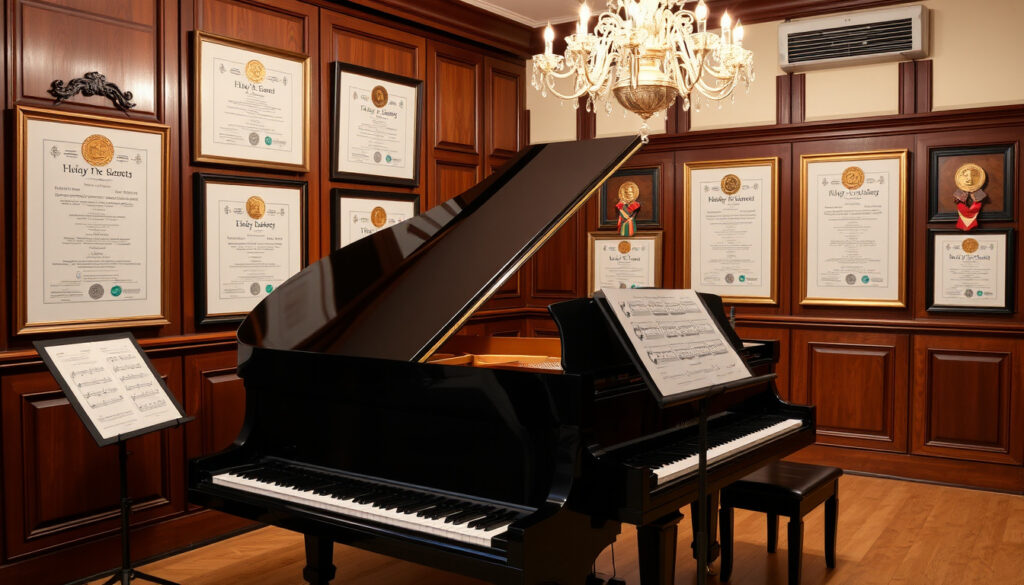
Royal Irish Academy of Music: RIAM Exams, Rankings & Fees
Ireland’s oldest conservatoire turns 175 this year—and it still draws students from across the island and beyond. The Royal Irish Academy of Music (RIAM) made history as the first Irish conservatoire to crack the QS World University Rankings, placing 12th globally for music (RIAM Official). If you’re curious about what makes a boutique Dublin school punch above its weight, read on.
Founded: 1848 · Location: Dublin, Ireland · QS Music Ranking: 12th · Type: Ireland’s oldest conservatoire · Specialties: Classical music, Irish harp
Quick snapshot
- Founded 1848 — one of Europe’s oldest conservatoires (QS Top Universities)
- Irish harp specialty since founding era (Yocket)
- Associate college of Trinity College Dublin (QS Top Universities)
- 1848: Founded as Ireland’s premier music school (EduRank)
- 2025: QS Subject Ranking #51–100 for Music (QS Top Universities)
- Recent: Ranked 12th in QS World for Music (RIAM Official)
- Continued growth in global rankings anticipated
- Expansion of junior training programs likely
- Digital exam offerings may broaden access
Five key institutional facts anchor everything that follows.
| Field | Value |
|---|---|
| Official Website | www.riam.ie |
| Founded | 1848 |
| QS Ranking (Music) | 12th |
| Exams Site | www.riamexams.ie |
| Wikipedia | en.wikipedia.org/wiki/Royal_Irish_Academy_of_Music |
What is the acceptance rate for the Royal Irish Academy of Music?
RIAM does not publish a formal acceptance rate. Estimates from third-party aggregators put the figure around 51%, though this figure is not confirmed by the institution itself (EduRank). Rather than competing purely on grades, admissions at RIAM are structured around specific requirements—which means a competitive applicant pool still has room for musicians who meet the bar.
Admission process overview
Undergraduate applicants need an Irish Leaving Certificate or equivalent, two recommendation letters, a personal statement, five original compositions, and proof of English proficiency (EduRank). International candidates may apply by examination, and RIAM’s associate relationship with Trinity College Dublin opens additional pathways for degree-seeking students.
Factors influencing acceptance
With approximately 175 students enrolled at any given time, RIAM operates as a deliberately small conservatoire (QS Top Universities). That tight cohort size shapes how competitive each program cycle is—it is less about beating a crowd and more about demonstrating readiness for intensive one-to-one instruction.
What is the ranking of the Royal Irish Academy of Music in the world?
RIAM’s most headline-generating ranking is 12th globally for Music in the QS World University Rankings—a milestone that made it the first Irish conservatoire to enter those rankings (RIAM Official). More granular rankings show it placing 30th in Ireland and among the top nationally, though general university rankings that treat it as a broader institution rank it lower.
QS World Ranking details
The QS Subject Ranking for Music places RIAM in the 51–100 band for 2025, which is the broader category-level ranking, while the 12th-place finish represents the more specific QS World ranking for Music (QS Top Universities). Being ranked 12th positions RIAM among globally consequential conservatories, an extraordinary achievement for Ireland.
Subject-specific performance
Music-specific ranking systems recognize RIAM for its faculty contact hours and graduate outcomes. The conservatoire provides two hours of one-to-one tuition per week—the highest level in Europe (QS Top Universities). That individual attention ratio is a meaningful differentiator when comparing conservatoires by outcome quality.
Royal Irish Academy of Music Exams
Beyond its degree programs, RIAM operates a Local Centre Examination System covering classical music and speech/drama, serving over 40,000 students each year (Edarabia). The exam network extends across Ireland’s 32 counties, making it a national institution for music assessment.
Exam structure
Examinations run through local centres with trained adjudicators who assess candidates in person. Each candidate receives written feedback—a feature RIAM promotes as a mark of quality versus purely automated assessment. The five faculties (Keyboard, String, Woodwind/Brass/Percussion, Vocal, and Musicianship) each maintain their own syllabus and progression pathway (Yocket).
Preparation and benefits
Students preparing for RIAM exams work through a structured syllabus that builds both technical command and interpretive maturity. The practical exam format assesses performance alongside written musicianship, and grades from RIAM carry weight within Irish secondary education—Junior Cycle Music and Leaving Certificate Music both link to RIAM standards (EduRank).
RIAM’s national focus gives it a distinct edge in Irish contexts, but students seeking internationally portable credentials may find ABRSM or Trinity College London qualifications carry broader recognition abroad (Sandy Cove School of Music).
Royal Irish Academy of Music fees
RIAM publishes tuition ranges that differ sharply between domestic and international students. Domestic tuition starts from around €3,000 annually, while international fees begin near €16,000—reflecting the institution’s cross-subsidy model for Irish music education (QS Top Universities).
Tuition breakdown
Bachelor of Music tuition totals €16,500 over four years, and the Master of Music costs €19,500 for two years (EduRank). For those considering a shorter postgraduate pathway, the Postgraduate Diploma in Music Performance is €12,500 for one year.
Additional costs
Junior Cycle Music and Leaving Certificate Music courses run approximately €1,200 for two years each (EduRank). Living expenses in Dublin average €15,900 annually according to third-party estimates (Yocket). Students should also budget for instrument-specific costs, exam registration fees (roughly €45–€200 per subject), and materials.
For Irish domestic students, RIAM’s fees remain competitive compared to international conservatoire alternatives. EU and international students face a significantly higher cost base—factor this in before applying.
Royal Irish Academy of Music reviews
Student reviews of RIAM are mixed. Positive feedback highlights the quality of teaching and performance opportunities, while negative reviews point to administrative friction—particularly around communication speed and application processing timelines (Wanderlog).
Student feedback
Students consistently praise the individual attention RIAM offers—the two hours of weekly one-to-one instruction ranks as the highest in Europe, according to QS Top Universities (QS Top Universities). Faculty expertise and the institute’s historic Irish musical tradition draw commendation, particularly from students focused on classical performance and Irish harp.
Reputation highlights
RIAM’s 175-year heritage and associate status with Trinity College Dublin give graduates a credential that carries weight in Irish music circles. The conservatoire’s Georgian building in central Dublin adds a tangible sense of place that reviewers often mention. For students seeking intensive individual coaching in classical music, RIAM delivers on its core promise.
Administrative responsiveness varies—applicants should build extra time into their schedules and follow up proactively to avoid bottlenecks in the process.
The Royal Irish Academy of Music has achieved a significant milestone by becoming the first Irish conservatoire to enter the World University rankings.
— YouTube (RIAM milestone announcement, YouTube)
Being ranked 12th positions RIAM among this esteemed group of globally consequential conservatoires, an extraordinary achievement for Ireland.
— RIAM Official (RIAM Official)
Summary
RIAM occupies a singular position in Irish music education—small by design, intensive in its teaching model, and punching well above its weight in global rankings. Its exam system alone serves over 40,000 students annually, giving it a reach far beyond its 175-student campus. For students weighing conservatoire options, RIAM makes a strong case if intensive individual development and Irish musical tradition appeal. Those preferring broader orchestral opportunities at larger institutions may need to weigh the trade-off between personalised coaching and ensemble scale.
Related reading: St Columba’s College Dublin
Frequently asked questions
What programs does the Royal Irish Academy of Music offer?
RIAM offers junior, pre-college, undergraduate, and postgraduate programs including Diploma, Bachelor of Music, Master of Music, Doctoral degrees, part-time tuition, and short courses (Yocket).
Where is the Royal Irish Academy of Music located?
RIAM is located at 36–38 Westland Row in central Dublin, in a Georgian building that is a protected structure (Edarabia).
When was the Royal Irish Academy of Music founded?
RIAM was founded in 1848, making it Ireland’s oldest music institution and one of the oldest conservatoires in Europe (Shiksha).
What is the Royal Irish Academy of Music known for?
RIAM is known for classical music training, Irish harp specialty, its intensive one-to-one teaching model, and its national exam system that serves over 40,000 students annually (Edarabia).
Does the Royal Irish Academy of Music offer junior training?
Yes. RIAM offers Junior Cycle Music and Leaving Certificate Music courses, plus a Junior Programme that introduces younger students to conservatoire-level training (EduRank).
How does RIAM support Irish harp studies?
Irish harp has been central to RIAM’s identity since its founding. The conservatoire maintains a dedicated harp faculty and includes Irish harp repertoire across its exam syllabi and performance opportunities (Yocket).
What is the RIAM YouTube channel for?
The RIAM YouTube channel shares performance footage, student features, and institutional announcements—including the milestone video announcing RIAM as the first Irish conservatoire to enter World University Rankings (YouTube).
More related posts
 Carry-On 2024 Review: Is It Worth Watching on Netflix?
 Sam Rivers Cause of Death: Limp Bizkit Bassist Details
 Ivory Coast National Football Team – Third AFCON Title in 2024
 Lily Phillips Net Worth: How She Makes Money & Millionaire Claim
 Kpop Demon Hunters Songs – Full Tracklist and Artists
 When Did Russia Invade Ukraine? 2022 Date & Timeline
 Sesko Next Club Odds: Man United 2/9 Favourites Seal Deal
 New Balance 530 Pink: Where to Buy, Sizing & Style Guide