Beats Powerbeats Pro 2 Review: Worth It for Workouts?
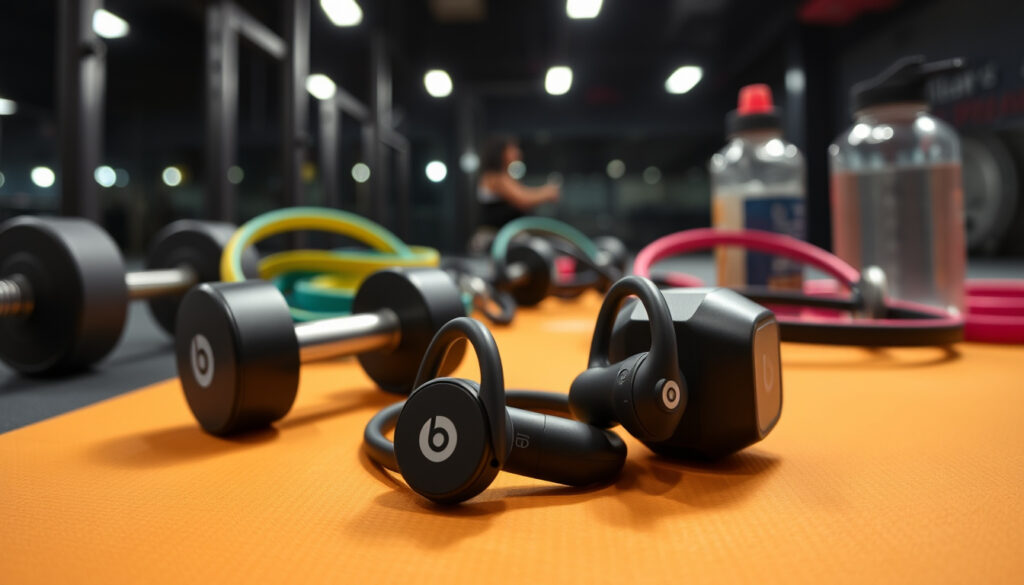
If you’ve ever mid-run reached up to adjust an earbud that’s sliding out, you already know the appeal of earhooks. Beats built the Powerbeats Pro 2 around one promise: music and heart-rate tracking that stays put when you’re sweating through a workout.
Battery Life: Up to 45 hours with case ·
Chip: Apple H2 ·
Key Features: Heart-rate monitoring, Active Noise Cancelling ·
Fit: Secure earhooks ·
Case Size Reduction: 33% smaller
Quick snapshot
- Released February 11, 2025 with Apple H2 chip (Gadget Flow)
- Optical heart-rate sensors pulse over 100 times per second (SoundGuys)
- 45 hours total battery with charging case (DC Rainmaker)
- Whether Powerbeats Pro 3 is in development (no confirmed timeline)
- Full impact of the Powerbeats 2 lawsuit settlement on Pro 2 market perception
- Heart-rate sensor technology may spread to future AirPods models
- Beats app updates could expand third-party app compatibility
| Specification | Value |
|---|---|
| Model | Powerbeats Pro 2 |
| Battery Life | Up to 45 hours with case |
| Chip | Apple H2 |
| Noise Control | Active Noise Cancelling + Transparency |
| Fit Type | Secure earhooks |
| Colors | Electric Orange, Quick Sand, Black |
Is Beats Powerbeats Pro 2 worth it?
For fitness-first listeners, the Powerbeats Pro 2 solve a real problem: keeping music and biometric data locked in during dynamic movement. The optical heart-rate sensors sit on both earbuds, using green LED lights pulsing over 100 times per second to track your effort level. Runner’s World testing showed tracking consistent with Apple Watch during short runs. Heart rate data broadcasts to third-party fitness apps and gym equipment via Bluetooth, syncing with platforms like Peloton and Nike Run Club.
The Apple H2 chip brings Active Noise Cancelling and Transparency Mode — features absent from the original Powerbeats Pro. Battery stretches to 10 hours on the buds alone (with ANC off) and 45 hours total with the case, a significant jump from the original’s 24-hour total. The case itself shrank 33%, addressing a common complaint about the first generation.
The heart-rate monitor activates only during tracked workouts, not continuously throughout the day. Apps also default to Apple Watch data if both devices are worn simultaneously — meaning the earbuds won’t replace a dedicated fitness tracker for most users.
Pros and cons
Upsides
- Secure earhook design won’t slip during runs or weights
- 45-hour total battery life outperforms most competitors
- First Apple audio product with optical heart-rate monitoring
- IPX4 water resistance handles sweat and light rain
- ANC and Transparency Mode add versatility beyond workouts
Downsides
- No GPS, step count, or blood oxygen monitoring
- Heart rate drops out during high-intensity running intervals
- No Apple Fitness+ heart-rate integration
- Heavier and larger than AirPods Pro 2
- Prolonged use may cause earhook pressure for some users
Value for workouts
At around $250, these sit in premium territory — above standard wireless earbuds but below dedicated fitness trackers with GPS. The trade-off is straightforward: you get workout-friendly fit and biometric tracking without carrying a separate device, but you sacrifice the all-day monitoring and location features a smartwatch provides. For cyclists and gym-goers who already wear a watch, the Powerbeats Pro 2 add biometric redundancy rather than replacing anything.
What’s the difference between Powerbeats Pro and Pro 2?
Six years separate these generations, and Beats addressed nearly every complaint reviewers leveled at the original. The original Powerbeats Pro launched in May 2019 with no noise cancellation, no heart-rate tracking, and a bulky charging case that took up half a gym bag pocket. The Pro 2 dropped in February 2025 carrying Apple’s H2 chip, which enables ANC, Transparency Mode, and the fitness-tracking capabilities that define this release.
Here’s how the 2019 original stacks up against its 2025 successor across the key dimensions that matter for fitness-focused listeners.
| Feature | Powerbeats Pro (2019) | Powerbeats Pro 2 (2025) |
|---|---|---|
| Chip | Apple H1 | Apple H2 |
| Active Noise Cancelling | None | Yes |
| Transparency Mode | None | Yes |
| Heart-Rate Monitoring | None | Optical sensors (both earbuds) |
| Battery (buds only) | 9 hours | 10 hours (ANC off) |
| Battery (total with case) | 24 hours | 45 hours |
| Eartip options | 4 sizes | 5 sizes |
| Spatial Audio | No | Personalized Spatial Audio + Adaptive EQ |
Owners of the original Powerbeats Pro upgrading to Pro 2 get roughly double the battery life, noise cancellation, and a genuinely new feature in heart-rate tracking — making this one of Beats’ most justified generational jumps.
Do Powerbeats Pro 2 fall out?
The earhooks on the Powerbeats Pro 2 aren’t decorative — they’re the product’s defining design choice for workouts. Multiple reviews confirm the secure fit holds through treadmill runs, outdoor jogging, and weight sessions without adjustment. SoundGuys notes that the flexible earhooks prevent slippage during movement, though extended wear may create pressure on sensitive ears. The IPX4 water-resistance rating means sweat won’t compromise grip or electronics.
Five eartip options come included (up from four in the original), allowing more users to find a sealed, stable fit. The combination of earhook plus eartip creates a two-point stabilization system that AirPods — even with their ear-tip options — can’t match for high-movement scenarios.
The tradeoff for security is size and weight: the Powerbeats Pro 2 are noticeably larger and heavier than AirPods Pro 2. If you prioritize all-day comfort over workout stability, this matters. But for the gym or running, the hooks earn their bulk.
What is the Powerbeats Pro 2 lawsuit?
The Powerbeats Pro 2 aren’t the target of active litigation. The settlement that appears in search results refers to a $9.75 million class-action agreement covering original Powerbeats Pro owners, who reported the earbuds suffered from reduced battery life and charging failures within months of purchase. Beats and Apple settled the case without admitting fault, with claims processed through 2024.
For buyers considering the Pro 2, the original Powerbeats Pro’s battery issues appear to have been addressed in the new model. The larger case battery capacity (45 hours total versus 24) and the H2 chip’s power management suggest the degradation problems have been tackled. However, long-term durability data won’t emerge until the Pro 2 has been in consumers’ hands for at least a year.
Are Powerbeats Pro 2 better than competitors like Bose?
Comparing workout earbuds means prioritizing different features than general-purpose listening. The Bose Sport Earbuds excel at all-day comfort and sound quality for casual use, but they lack earhooks and heart-rate monitoring — two features that define the Powerbeats Pro 2’s purpose. SoundGuys notes that the Powerbeats Pro 2’s secure fit makes them the preferred choice for high-movement workouts compared to AirPods Pro 2.
Against Bose’s workout-focused options, the Powerbeats Pro 2’s biometric tracking creates a clear differentiator. No current Bose earbuds offer built-in heart-rate sensors, leaving that market exclusively to Beats (and, eventually, Apple’s AirPods Pro 3). The battery advantage is substantial: 45 hours total beats most competitors’ 24-30 hour totals.
Where Bose leads is in sound signature tuning and comfort for non-sport use. Some reviewers note the Powerbeats Pro 2 deliver better raw sound quality than AirPods Pro 2, though the comparison to Bose depends on genre preference — Beats’ signature bass-forward profile suits high-energy workouts but may fatigue during extended casual listening.
Confirmed vs unclear
What we know for certain
- Released February 11, 2025 with Apple H2 chip
- Optical heart-rate sensors pulse over 100 times per second on both earbuds
- 45 hours total battery life with case
- Heart-rate monitoring works for indoor cycling; drops during running intervals
- IPX4 water resistance and secure earhook fit
- Compatible with iOS and Android via Beats app
What remains uncertain
- Whether Powerbeats Pro 3 is in development
- How heart-rate accuracy holds over months of daily workouts
- Whether future software updates will enable continuous heart-rate tracking
- Full list of supported third-party apps beyond Peloton and Nike Run Club
What reviewers are saying
The Powerbeats Pro 2’s standout feature is its heart-rate monitoring. Apple says they put in over 1,500 hours of testing against 1,000 athletes, and it is incredibly accurate.
— SoundGuys (tech review publication)
If you’re looking for a more serious fitness tracker, you might want to consider an Apple Watch, where you can easily change the watch face to suit your workout. Apple Watch Zifferblatt wechseln
I think it’s really cool that the Powerbeats Pro 2 has a heart rate monitor but this is clearly a casual option. It won’t replace an Apple Watch for serious runners.
— Runner’s World (running-focused gear reviewer)
This would not only be the first time Apple has created a non-watch heart rate sensor — it’s also an interesting testbed for technology that may appear in AirPods Pro 3.
— DC Rainmaker (fitness technology specialist)
Bottom line
Beats built the Powerbeats Pro 2 for a specific audience: exercisers who want biometric feedback without strapping on a watch, and who prioritize staying power over all-day comfort. The heart-rate tracking works best for steady-state cardio like cycling, while the earhooks guarantee these won’t bounce free during burpees or sprints. The H2 chip brings noise cancellation that makes these viable for commutes and office use — not just the gym.
For runners who already wear an Apple Watch, the Powerbeats Pro 2 offer redundancy rather than replacement. But for cyclists, gym-goers, and anyone who prefers exercising without a watch on their wrist, this is the first AirPods-family product that genuinely tracks your effort level. The 45-hour battery removes charging anxiety, and the $250 price tag sits fairly for what you get — no more, no less.
Related reading: The Diary of a CEO podcast guide · AIB App Android Issues
youtube.com, soundguys.com, runnersworld.com, forums.appleinsider.com, slatepad.org, howtogeek.com, forums.appleinsider.com, youtube.com
While our focus remains on workout fit and value, the detailed specs breakdown highlights the Powerbeats Pro 2’s heart-rate sensor, ANC upgrades, and impressive 45-hour battery endurance.
Frequently asked questions
How long is the battery life of Beats Powerbeats Pro 2?
The earbuds deliver 10 hours of playback with Active Noise Cancelling turned off. With the charging case, total battery life reaches 45 hours — roughly double what the original Powerbeats Pro offered.
Does Beats Powerbeats Pro 2 have active noise cancelling?
Yes. The Apple H2 chip enables Active Noise Cancelling and Transparency Mode, features absent from the original Powerbeats Pro released in 2019.
Are Beats Powerbeats Pro 2 compatible with Android?
Yes. The Beats app for Android provides full functionality, including heart-rate monitoring. Note that on Android, heart-rate workout sessions must be started manually within compatible fitness apps.
What colors does Beats Powerbeats Pro 2 come in?
Three colors are available: Electric Orange, Quick Sand, and Black.
How secure is the fit of Beats Powerbeats Pro 2 for running?
The flexible earhooks combined with IPX4 water resistance and five eartip options create a stable fit that holds during running, weight training, and high-intensity intervals. Multiple reviews confirm no slippage during dynamic movement.
What chip powers Beats Powerbeats Pro 2?
The Apple H2 chip powers the Powerbeats Pro 2, enabling Active Noise Cancelling, Transparency Mode, Personalized Spatial Audio, Adaptive EQ, and heart-rate sensor integration.
Does Beats Powerbeats Pro 2 include heart-rate monitoring?
Yes. Optical heart-rate sensors on both earbuds use green LED lights pulsing over 100 times per second. The sensor activates during tracked workouts and broadcasts data to compatible fitness apps via Bluetooth. It does not provide continuous all-day monitoring.
More related posts
 Translate English to Tamil: Typing, Voice & Scan Methods
 Quote Devil Phone Number: Contact & Support Details
 Transformers: Rise of the Beasts: Box Office, Cast & Sequel
 Tuam Mother and Baby Home – Scandal Facts Timeline and Findings
 Boyle Arts Festival 2025: Dates, Tickets, Lineup & Schedule
 Man Utd v Liverpool: Head-to-Head, 7-0, & Key Stories
 Google Translate English to French: Tips & Quirks Explained
 Best Plants for Beginners: Easy Indoor & Outdoor Options