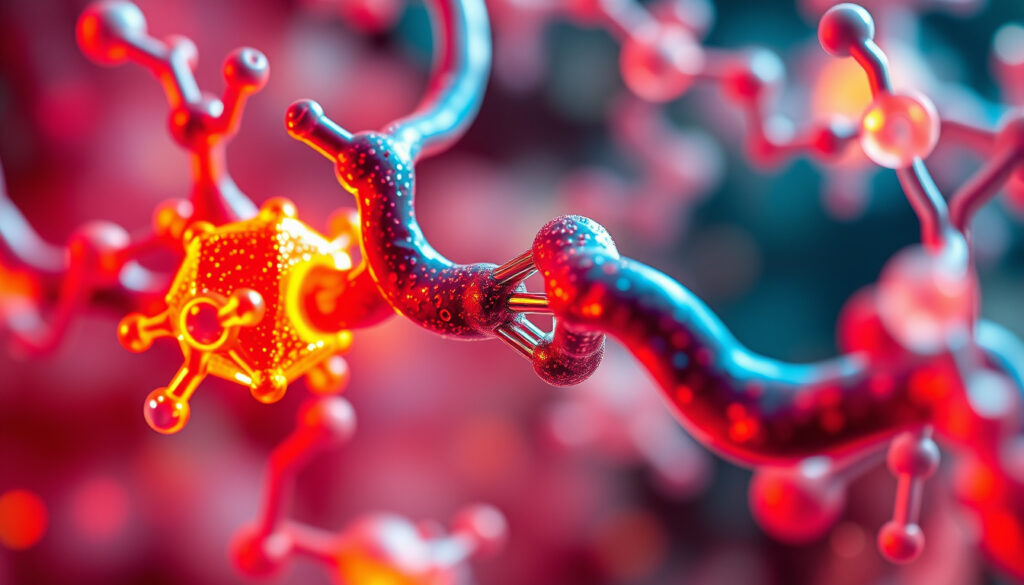
What Is an Enzyme? Definition, Function & Examples
Think about chewing a piece of bread — within seconds it starts to taste sweet. That’s not magic, it’s an enzyme called amylase going to work in your mouth. Enzymes are the reason your body can digest food, build muscle, and even think, yet most of us barely know them by name. This article unwraps the science of enzymes in plain English, from the classroom definition to the foods on your plate.
Enzymes in the human body: ~3,000 known enzymes ·
Speed increase factor: Up to 10⁶ times faster ·
Number of enzyme classes (EC): 6 ·
Temperature range for human enzymes: ~35–40°C
Quick snapshot
- Enzymes are biological catalysts that speed up reactions (NCBI Bookshelf (NIH))
- Most enzymes are proteins; some RNA (ribozymes) also act as catalysts (Albert.io (AP Biology review))
- Activity depends on temperature, pH, and concentration (Biology LibreTexts (Educational))
- Exact number of enzymes in the human body (estimates range from 3,000 to 100,000)
- Complete mechanisms of enzyme evolution remain under study
- First enzyme discovered: diastase (amylase) in 1833 by Anselme Payen
- “Lock and key” model proposed by Emil Fischer in 1894
- Growing interest in enzyme supplements and enzyme-rich diets
- More research on ribozymes and artificial enzymes for medicine
Five key facts, one takeaway: enzymes are the unsung workers that make life possible — and we’re only beginning to understand their full repertoire.
The table below lays out the core attributes at a glance.
| Attribute | Detail |
|---|---|
| Definition | Biological catalysts that accelerate chemical reactions in living organisms (NCBI Bookshelf (NIH)) |
| Composition | Mostly proteins; some RNA (ribozymes) (Albert.io (AP Biology review)) |
| Function | Lower activation energy, increase reaction rate (Chemistry LibreTexts (University resource)) |
| Examples | Amylase, lactase, DNA polymerase, pepsin, lipase (Cleveland Clinic (Health authority)) |
| Sources | All living cells; also found in raw foods (PMC (NIH)) |
What is an enzyme in simple terms?
An enzyme is a biological catalyst — a molecule that speeds up chemical reactions without being used up in the process. Think of it as a tiny machine that grabs a specific molecule (the substrate), does something to it, and lets it go, ready to work again. Most enzymes are proteins, folded into precise shapes. A few are RNA molecules called ribozymes (NCBI Bookshelf (NIH)).
What are enzymes made of?
- Proteins made from chains of amino acids. The sequence determines the 3D shape and the active site where the substrate binds (StatPearls / NCBI Bookshelf (Medical textbook)).
- Some enzymes need a cofactor — a metal ion or coenzyme — to work. Examples: zinc for alcohol dehydrogenase, vitamins for many metabolic enzymes.
- Ribozymes are made of RNA and catalyze reactions like cutting other RNA molecules.
Enzymes are nature’s speed merchants. Without them, a digestion process that takes minutes would take years. That’s the difference between life and a lab bench.
Where are enzymes found?
Every living cell contains enzymes. Bacteria, fungi, plants, animals — all rely on them to drive metabolism, repair DNA, and break down food. In your body, enzymes work in the mouth (amylase), stomach (pepsin), small intestine (lipase, lactase), liver, and even inside mitochondria (Medical News Today (Health media)). Enzymes also exist in raw foods, particularly in plants that rely on them to ripen and defend themselves.
The implication: enzymes are everywhere in biology, but their location shapes what they do. A digestive enzyme in your gut is useless inside a cell — context matters.
What is an enzyme GCSE answer?
For GCSE biology, the standard answer is: “Enzymes are biological catalysts that speed up reactions without being used up. Each enzyme has an active site that fits a specific substrate (lock-and-key model). Activity is affected by temperature, pH, and substrate concentration. If conditions are too extreme, the enzyme denatures — its shape changes permanently and it stops working.”
What is enzyme in biology?
- Biological catalysts — lower activation energy required for reactions (Biology LibreTexts (Educational)).
- Substrate specificity: each enzyme catalyzes one type of reaction or a few very similar ones (NCBI Bookshelf (NIH)).
- Temperature optimum for human enzymes: about 37°C. Above 40°C, denaturation risk rises.
- pH optimum varies: pepsin works best at pH 1.5–2 (stomach), while amylase prefers pH 6.7–7 (mouth).
Many exam answers stop at “lock and key,” but the induced fit model shows that enzymes often change shape slightly when the substrate binds — a more accurate picture. Students who mention both models score higher.
Why this matters: GCSE-level understanding is a launchpad. The same principles explain why fever (high temperature) can impair enzyme function, and why poison often works by blocking an enzyme’s active site.
What is the function of the enzyme?
At the molecular level, the job of an enzyme is to lower the activation energy of a chemical reaction. Instead of needing a high-energy kick to start, the reaction can proceed at body temperature. This allows metabolic pathways — from breaking down glucose to copying DNA — to happen fast enough to sustain life (NCBI Bookshelf (NIH)).
- Enzymes do not change the equilibrium of a reaction; they only speed up the rate.
- Enzymes are recycled — one enzyme molecule can catalyze thousands of reactions per second.
- They are selective: a single enzyme typically works on one substrate or a small family of related molecules.
When an enzyme malfunctions — due to a genetic mutation, poisoning, or extreme conditions — the reaction it drives slows to a crawl. That’s why lactose intolerance happens: not enough lactase enzyme to break down milk sugar.
What are 5 examples of enzymes?
What are 5 enzymes in the human body?
- Amylase — breaks down starches into sugars. Found in saliva and pancreatic juice (Cleveland Clinic).
- Lactase — splits lactose (milk sugar) into glucose and galactose. Deficiency causes lactose intolerance (Cleveland Clinic).
- DNA polymerase — synthesizes new DNA strands during cell division. Essential for replication (StatPearls / NCBI).
- Pepsin — digests proteins in the stomach. Works in highly acidic conditions (Medical News Today).
- Lipase — breaks down dietary fats into fatty acids and glycerol. Secreted by the pancreas (Cleveland Clinic).
What is an enzyme example?
One classic example is catalase, found in nearly all living cells. It breaks down hydrogen peroxide (a toxic byproduct of metabolism) into water and oxygen — a reaction it accelerates by a factor of 10⁶ (Chemistry LibreTexts).
The pattern: enzymes are named for what they do — “-ase” suffix attached to the substrate (lactase on lactose, sucrase on sucrose). Easy once you know the rule.
What foods are high in enzymes?
How to incorporate enzyme blends into your daily diet?
Certain raw and fermented foods contain natural enzymes that may support digestion. The evidence is strongest for fruits like pineapple and papaya, which have been studied for their enzyme content (Healthline (Health media)).
The foods below offer the best-documented enzyme sources.
| Food | Enzyme | What it does |
|---|---|---|
| Pineapple | Bromelain | Breaks down proteins (Restorative Medicine (Monograph)) |
| Papaya | Papain | Digests proteins, used in meat tenderizers (Restorative Medicine) |
| Raw honey | Diastase (amylase) | Breaks down starches |
| Kimchi, sauerkraut | Various (from fermentation) | May support overall digestion |
| Mango, banana, avocado | Amylase, glucosidases | Help ripen fruit; may aid digestion when raw |
- Eat one serving of raw pineapple or papaya daily — try it as a snack, not cooked (heat destroys enzymes).
- Include fermented vegetables — a spoonful of sauerkraut or kimchi with a meal can introduce live enzymes.
- Use raw honey instead of sugar — it contains natural amylase. Avoid pasteurized honey.
- Consider enzyme supplements if needed — for those with digestive issues, products containing lipase, protease, and amylase may help, but consult a healthcare professional first (Healthline).
Cooking above 48°C (118°F) can denature most food enzymes, so the benefits of raw foods are real but limited if you heat them. The body also produces its own enzymes — dietary enzymes are a bonus, not a necessity.
Confirmed facts vs. what’s unclear
Confirmed facts
- Enzymes are catalysts — they speed reactions without being consumed (NCBI Bookshelf (NIH))
- Enzymes are primarily proteins (StatPearls / NCBI Bookshelf (Medical textbook))
- Temperature and pH affect activity (Biology LibreTexts (Educational))
- Enzymes are specific to substrates (NCBI Bookshelf (NIH))
What’s unclear
- Exact number of enzymes in humans: estimates range widely (3,000 to 100,000)
- Full details of how enzymes evolved their specificity are still being studied
“Enzymes are the workhorses of the cell — without them, life as we know it would grind to a halt.”
NCBI Bookshelf (National Institutes of Health)
“Lactase is a classic example of enzyme specificity: it recognizes only lactose and nothing else.”
Cleveland Clinic (Digestive health experts)
Summary: Enzymes made simple
Enzymes are the tiny machines that run your body’s chemistry — without them, you couldn’t digest, breathe, or think. They’re elegant, specific, and remarkably fast. For anyone trying to make sense of biology or looking to support their health through diet, the takeaway is clear: respect the warmth, eat some raw foods, and remember that most of the enzyme magic happens inside your own cells. For the GCSE student, the straightforward answer is: “catalyst, active site, denature, done.” For the curious eater, the insight is that an enzyme-rich plate starts with a fresh pineapple and a spoonful of kimchi.
For readers in the UK, the implication is clear: whether you’re revising for exams or optimizing your gut health, understanding enzymes gives you an edge — in class or at the dinner table.
Related reading: **How to Relieve Stress: Evidence-Based Tips That Actually Work** · **Grinding Teeth in Sleep: Causes, Remedies, and Treatment**
A detailed explanation of what enzymes are and how they function can be found in definition and function of enzymes.
Frequently asked questions
Can enzymes be reused?
Yes. Enzymes are not consumed in the reactions they catalyze. One enzyme molecule can perform thousands of reactions per second and continue working as long as conditions are favorable (NCBI Bookshelf (NIH)).
What happens when enzymes are denatured?
Denaturation means the enzyme loses its 3D shape. The active site is deformed, so the substrate no longer fits. This is often irreversible — the enzyme stops working. Common causes: high temperature, extreme pH, or certain chemicals (Biology LibreTexts (Educational)).
Are all enzymes proteins?
Most are proteins, but some RNA molecules (ribozymes) also function as enzymes, catalyzing reactions like RNA splicing (Albert.io (AP Biology review)).
How are enzymes named?
Enzymes typically end in “-ase” and are named after their substrate (e.g., lactase works on lactose) or the reaction they catalyze (e.g., DNA polymerase). The official EC classification groups them into six main classes (StatPearls / NCBI Bookshelf (Medical textbook)).
What is the role of enzymes in digestion?
Digestive enzymes break down food into absorbable molecules. Amylase handles starches, pepsin handles proteins, and lipase handles fats. Without them, nutrients would pass through the gut undigested (Cleveland Clinic (Health authority)).
Do enzymes work outside the body?
Yes. Many enzymes are isolated and used in industry — in detergents, food processing (e.g., papain to tenderize meat), and diagnostic tests (PMC (NIH)).
More related posts
 Hotel Las Vegas Salou Reviews & Amenities (2025)
 Adam Sandler Net Worth 2025: $440M and Still Growing
 Alfaparf Shampoo & Conditioner: Complete Buying Guide & Reviews
 Click and Go Over 60 Holidays: Benefits & Tips
 Texts and Tests 4: PDF, Solutions & Online Access
 At The Races Greyhounds: Results, Live & Tips Today
 It Was Just an Accident (2025): Reviews, Plot & Streaming
 When Is PS6 Coming Out – Rumors Point To 2027-2028