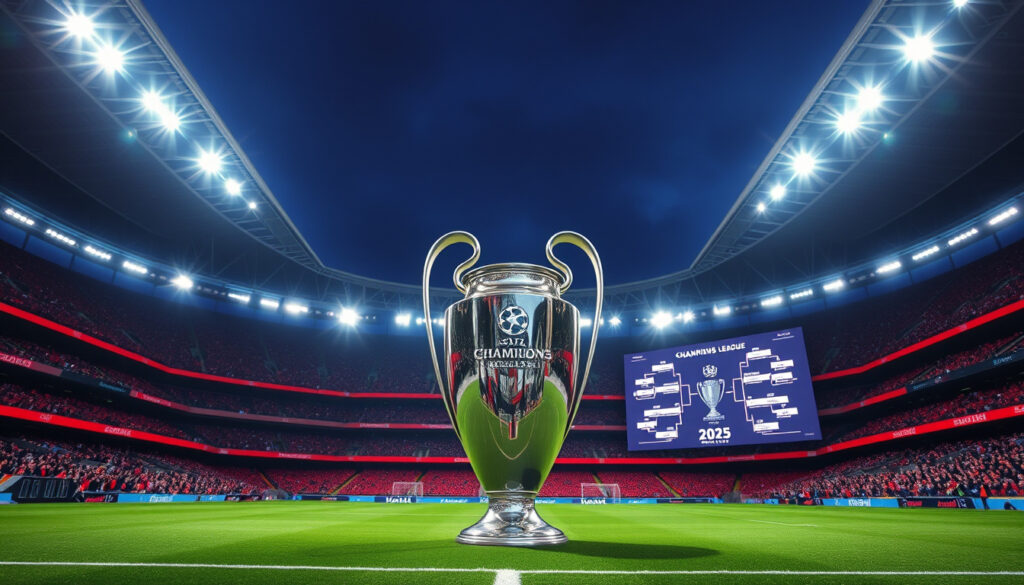
UEFA Champions League 2025: Final Venue, Date & New Format
The 2025 UEFA Champions League final in Munich isn’t just another European Cup decider — it’s the last chapter of a format that has defined elite club football for two decades. With a 36-team league phase coming for the 2025/26 season, the clash between Paris Saint-Germain and Inter Milan at the Allianz Arena on 31 May 2025 carries a sense of farewell to the old group-stage structure. This guide covers the confirmed details of this year’s final, the radical changes ahead, and the key dates every fan needs.
Final Date: 31 May 2025 ·
Final Venue: Munich Football Arena (Allianz Arena) ·
Winner: TBD as of March 2025 ·
Teams in League Phase: 36 ·
2025/26 Start Date: July 2025 ·
2025/26 Final Venue: Budapest (Puskás Aréna)
Quick snapshot
- 2025 final at Munich Football Arena (Allianz Arena) on 31 May 2025 (UEFA Official)
- 2025 final participants: Paris Saint-Germain vs Inter Milan (UEFA Official)
- Exact time of the 2026 round of 16 draw (not yet announced by UEFA) (UEFA Official)
- Full list of qualified teams for 2025/26 — several domestic leagues still ongoing (Sports Illustrated)
- 2025/26 season kicks off July 2025 with qualifying rounds (UEFA Official)
- League phase begins September 2025; final in Budapest May/June 2026 (Sports Illustrated)
- 2025 final (31 May) followed by 2025/26 qualifying from July 2025 (UEFA Official)
- First Champions League final in Hungary at Puskás Aréna, Budapest in 2026 (Sports Illustrated)
| Fact | Detail |
|---|---|
| 2025 Final Date | 31 May 2025 |
| 2025 Final Venue | Munich Football Arena, Germany |
| 2025 Final Participants | Paris Saint-Germain vs Inter Milan |
| 2025/26 Final Venue | Puskás Aréna, Budapest |
| 2025/26 League Phase Teams | 36 |
| 2025/26 Matches per Team | 8 |
Where is the UEFA Champions League 2025 final?
Which stadium hosts the 2025 final?
- The 2025 UEFA Champions League final will be played at the Allianz Arena in Munich, Germany, on Saturday, 31 May 2025 (UEFA Official). UEFA designates the venue as the “Munich Football Arena” during the final, though the stadium’s commercial name is Allianz Arena.
The stadium, home to Bayern Munich, has a capacity of 75,000 for domestic matches and hosted the 2012 Champions League final. For the 2025 edition, the venue will be branded under UEFA’s neutral naming policy.
Munich becomes the first city to host a Champions League final for a second time at the same stadium after 2012 — a rare repeat that speaks to the city’s infrastructure and UEFA’s trust in the venue.
What is the official name of the venue for the 2025 final?
- UEFA officially refers to the stadium as the “Munich Football Arena” for all competition matches, including the 2025 final (UEFA Official). This follows the same naming policy applied to other sponsored venues such as the Etihad Stadium (City of Manchester Stadium) and the Emirates Stadium (Ashburton Grove).
The practice allows UEFA to maintain a consistent naming convention across all broadcast and promotional materials, free from commercial sponsor branding. Fans attending the final will still see the Allianz Arena exterior, but all official UEFA communications will use “Munich Football Arena.”
For ticket buyers and travellers searching “Allianz Arena” on navigation apps: the stadium is the same building, but official signage and tickets will read “Munich Football Arena” on matchday.
Which teams are playing in the Champions League in 2025?
Which teams are in the 2025 final?
- The 2025 UEFA Champions League final features Paris Saint-Germain against Inter Milan (UEFA Official). The winner will be crowned European champion for the 2024/25 season on 31 May in Munich.
For PSG, this is a shot at a first Champions League title after years of heavy investment. Inter Milan, three-time winners (1964, 1965, 2010), are chasing a fourth European crown and their first since the treble season under José Mourinho.
Which clubs qualified for the 2025/26 season?
- The 2025/26 Champions League features an expanded 36-team league phase for the first time (UEFA Official). England has secured six spots due to the UEFA coefficient ranking — the highest allocation of any nation — meaning the Premier League’s top six finishers in 2024/25 will qualify.
Other major leagues see their standard allocations: Spain and Germany get four spots each, Italy four, France three. The additional two places go to the domestic league with the highest coefficient performance from the previous season and the fifth-ranked league, based on the new access list.
The full qualified list will be finalized after the 2024/25 domestic seasons conclude in May 2025.
What time is the Champions League round of 16 draw in 2026?
When is the round of 16 draw?
- The 2025/26 Champions League round of 16 draw is scheduled to take place in early 2026, following the conclusion of the knockout round play-offs in February 2026 (UEFA Official). UEFA has not yet announced an exact date or time for the draw ceremony.
Historically, the round of 16 draw has been held in mid-December during the group stage era. With the new league phase format ending in January 2026, the draw will shift to a February window. Fans should expect a 12:00 CET or 18:00 CET start time, based on past UEFA draw schedules.
Where can I watch the draw live?
- UEFA broadcasts the draw live on its official website (UEFA.com) and via its YouTube channel (UEFA Official). Major broadcasters such as BBC Sport, CBS Sports (USA), and DAZN (Canada) also carry the draw live.
The draw typically takes 30–45 minutes and includes the seeding for the knockout bracket. For the 2025/26 season, the round of 16 will feature the top eight teams from the league phase plus the eight winners of the knockout play-offs between teams placed 9th to 24th.
Where will the 2025-26 Champions League final be played?
What is the venue for the 2026 final?
- The 2026 UEFA Champions League final will be held at Puskás Aréna in Budapest, Hungary, on Saturday, 30 May 2026 (UEFA Official). This marks the first time the Champions League final is staged in Hungary.
The stadium, named after Hungarian legend Ferenc Puskás, has a capacity of 67,215 (Sports Illustrated). Designed by György Skardelli, it opened in 2019 and hosted three matches at UEFA Euro 2020, including a group-stage fixture between Portugal and France.
Budapest’s selection as host reflects UEFA’s strategy to take the final to Central and Eastern Europe after decades dominated by Western venues. For Hungarian football, it’s the biggest match since the 1954 World Cup final.
When is the 2026 final?
- The 2026 final kicks off at 6 p.m. CET (5 p.m. BST, 12 p.m. ET, 9 a.m. PT) — a three-hour earlier start than the traditional 9 p.m. CET slot used since 2019 (Sports Illustrated). This is the biggest kickoff time change in the competition’s history.
UEFA moved the final to a Saturday in 2010 and pushed kickoff to 9 p.m. CET in 2019. The shift to 6 p.m. CET for 2026 aims to improve accessibility for Asian and American audiences and to allow a more fan-friendly matchday experience in Budapest.
What is the 2025/26 Champions League format?
How does the league phase work?
- Starting with the 2025/26 season, the Champions League replaces the traditional eight-group format with a single 36-team league phase (UEFA Official). Each team plays eight matches (four home, four away) against eight different opponents, determined by a draw.
The league phase is a single standings table. The top eight teams advance directly to the round of 16. Teams placed 9th to 24th enter a two-legged knockout play-off to decide the remaining eight round of 16 spots. Teams placed 25th or lower are eliminated with no access to the Europa League.
What changed from the group stage?
- The old group stage featured 32 teams divided into eight groups of four, each playing six matches. The top two from each group advanced to the round of 16 (UEFA Official). The new format increases the total number of participants to 36 and replaces group play with a single league table.
The key differences: more teams (36 vs 32), more matches per team (8 vs 6), no fixed groups, and a play-off round for places 9–24. The total number of matches in the competition rises from 125 to 189.
More matches mean more revenue and more games for fans, but also more fixture congestion for top clubs already competing in domestic leagues and cups. UEFA’s argument: the league phase produces a truer ranking because every team plays a broader set of opponents.
2025/26 season timeline
Seven key dates shape the first season under the new format — one pattern: the season runs from July 2025 to May/June 2026, with a January end to the league phase.
| Date/Period | Event |
|---|---|
| 2025-05-31 | 2025 UEFA Champions League final at Munich |
| July 2025 | 2025/26 UEFA Champions League qualifying starts |
| September 2025 | 2025/26 league phase begins (first matchday) |
| January 2026 | League phase ends |
| February 2026 | Knockout round play-offs begin |
| 2026 (TBC) | Round of 16, quarter-final, and semi-final draws |
| May/June 2026 | 2026 UEFA Champions League final in Budapest |
The implication: the entire league phase compresses into roughly five months (September to January), followed by a knockout phase that stretches into late May. For broadcasters and fans, the busy period shifts from autumn to mid-winter.
Confirmed facts vs what remains unclear
Six details are locked in by UEFA: the 2025 final at Munich Football Arena on 31 May, PSG vs Inter as participants, the 2025/26 final at Puskás Aréna in Budapest on 30 May 2026, the 36-team league phase format, the 6 p.m. CET kickoff for the 2026 final, and that this will be the first final in Hungary. Four areas remain open: the exact time of the 2026 round of 16 draw (UEFA has not published it), the full list of qualified teams for 2025/26 (several European leagues are still running), kickoff schedules for 2025/26 group-stage matchdays, and referee/VAR appointments for the 2025 final.
The pattern: UEFA confirms venues and structural changes years in advance, but operational details like draw times and officials come weeks before the event. Fans planning travel to Budapest for the 2026 final can book with confidence; fans waiting for the round of 16 draw schedule will need patience.
“The new format allows every team to compete against a broader range of opponents in a single league table, which we believe will increase excitement and competitive balance across the entire season.” — Aleksander Čeferin, UEFA President, on the 2025/26 league phase format (UEFA Official)
“Facing a team like Inter Milan in a Champions League final is exactly the kind of challenge that motivates a squad. We know what we have to do to bring the trophy home.” — Luis Enrique, Paris Saint-Germain manager, ahead of the 2025 final (Sports Illustrated)
What this means: both managers know the final is a career-defining moment. For Enrique, a win would cement PSG’s legitimacy among Europe’s elite. For Simone Inzaghi, it would be the crowning achievement of his Inter rebuild after the 2023 final appearance.
Related reading: 2026 FIFA World Cup UEFA Qualification Schedule: Dates & Fixtures
The 2025 final saw Paris Saint-Germain defeat Inter Milan 5-0 at the 2025 Champions League final at Allianz Arena, marking the club’s first European title.
Frequently asked questions
Where can I buy tickets for the 2025 Champions League final?
How many matches are in the 2025/26 league phase?
What is the prize money for the 2025 Champions League winner?
Who has scored the most goals in the 2024/25 Champions League?
How to watch the 2025 Champions League final live?
Which league gets the extra Champions League spot in 2025/26?
For Premier League clubs chasing a top-six finish in 2024/25, the arithmetic is brutal: finish seventh and miss out on a Champions League spot that would have been automatic under the old system. For fans of English clubs, the 2025/26 season offers six places but also stiffer competition from Europe’s top leagues. Every domestic match now carries European consequences.
More related posts
 Mark & Spencer Killarney: Store Hour , Di count , and Local New
 Birmingham Airport to City Centre: Best Ways (2025)
 Bleu de Chanel Parfum: Scent, Longevity & Sauvage Comparison
 Heating Bill Assistance Ireland: Fuel Allowance & €400 Lump Sum
 Why The Last Voyage of the Demeter Bombed at the Box Office
 Man City vs West Ham 1-1: Title Blow, Survival Boost for Hammers
 Trad on the Prom 2026: Show Length, Tickets, Reviews & Venue
 Cork Prize Bond Winner: Latest Results & Check Guide