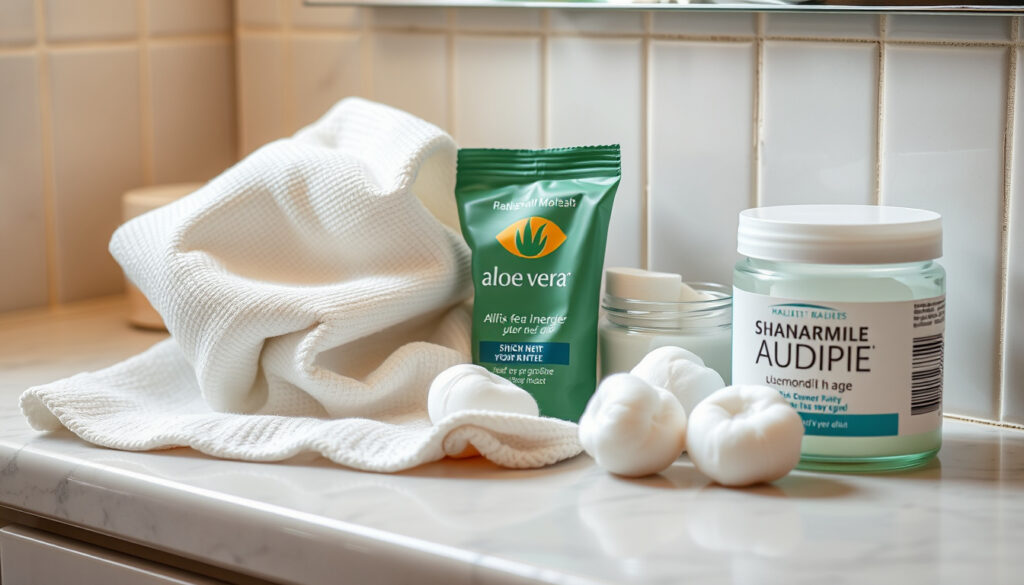
How to Treat a Stye: Quick Home Remedies That Work
That red, tender bump on your eyelid is a stye — and while it is not dangerous, it can make you miserable for a week or two. The good news is that warm compresses, used consistently, are the single most effective home treatment according to the Mayo Clinic, NHS, and eye specialists worldwide. Here is how to use them properly and what else helps.
Compress duration: 5–10 minutes ·
Frequency: 3–4 times a day ·
Typical healing time: 1–2 weeks ·
Contagious: No ·
Primary treatment: Warm compress
Quick snapshot
- Warm compresses (5–10 min, 3–4× daily) speed up drainage and cut healing time in half, per Mayo Clinic Health System
- Most styes resolve within one week without specific treatment, per Mayo Clinic Health System
- How much faster tea bag compresses work compared with a plain washcloth — studies are lacking, per NW Eye Clinic
- Optimal microwave time for reusable compress masks varies between 15–30 seconds across sources, per University of Utah Health
- Styes begin to shrink after a few days of consistent compress therapy, according to NYU Langone Health
- If the bump persists beyond 3–4 weeks, medical evaluation is warranted, per NYU Langone Health
- Consistent compress use leads to natural drainage; antibiotics or in-office procedures are reserved for stubborn cases, per Cleveland Clinic
The following table summarizes the key medical facts about styes that most major health authorities agree on.
| Fact | Detail |
|---|---|
| What it is | Infected eyelid gland |
| Common trigger | Staphylococcus bacteria |
| Self-resolves | In most cases |
| Key treatment | Warm compress 3–4× daily |
How do you get rid of a stye quickly?
The fastest route to relief is a warm compress applied the right way, for the right duration, at the right frequency. Here is what the evidence shows.
Warm compress method
- Soak a clean washcloth (or flannel) in warm water — comfortably hot, not scalding
- Ring out excess water and place it over the closed affected eyelid
- Hold for 5–10 minutes; reheat the cloth every 2 minutes to maintain warmth
- Repeat 3–4 times per day, according to the NHS video protocol
The heat softens the blockage in the oil gland, allowing the stye to drain naturally. “The heat allows the stye to drain on its own,” explained Cleveland Clinic physician Dr. Goldman. Resist the urge to squeeze — that pushes infection deeper and can worsen the problem.
Eyelid cleaning steps
- Wash your hands thoroughly before and after touching the area
- Gently clean the base of the eyelashes with a moistened cotton bud twice daily, as recommended by Moorfields Eye Hospital
- Avoid wearing eye makeup or contact lenses until the stye heals
Consistency matters more than anything else. Apply the compress 3–4 times daily for 5–10 minutes each session, and most styes will start shrinking within a few days.
What causes a stye?
A stye, clinically called a hordeolum, is a localised bacterial infection in one of the tiny oil glands along the eyelid margin. The culprit is usually Staphylococcus aureus — common skin bacteria that can block a gland and trigger inflammation.
Main triggers
- Blocked oil glands along the eyelid edge
- Poor eyelid hygiene — not cleaning makeup off thoroughly
- Touching or rubbing the eyes with unwashed hands
- Using old or expired eye makeup
Risk factors
- Blepharitis (chronic eyelid inflammation)
- Diabetes or other conditions affecting immune function
- History of previous styes
Understanding that a stye is bacterial rather than viral explains why antibiotics are not always needed — most cases clear with heat and hygiene alone.
Confirmed
- Warm compresses (5–10 min, 3–4× daily) speed healing per Mayo and NHS
- Bacterial infection causes styes (blocked oil glands)
- Most styes resolve within 1–2 weeks without treatment
Uncertain
- Exact improvement speed from tea bag compresses vs washcloth
- Optimal microwave duration for reusable compress masks (15–30 seconds)
How long does a stye last?
Styes are self-limiting, meaning they tend to resolve on their own — but the timeline depends on whether you treat them. Without any treatment, a stye typically lasts 7–14 days. With consistent warm compress therapy, many people see noticeable improvement within 3–5 days.
Healing timeline
- Day 1–3: Stye is red, tender, and may feel larger as it comes to a head
- Day 3–5: With compress therapy, the bump begins to shrink as drainage starts
- Day 5–7: Most styes drain and flatten; tenderness subsides
- Beyond 2 weeks: If still present, consult a doctor — you may need antibiotic ointment or an in-office drainage procedure
When it persists
According to NYU Langone Health, if a bump persists beyond 3–4 weeks, medical evaluation is warranted. Stubborn styes may require prescription antibiotic ointment, oral antibiotics, or minor in-office drainage.
If the stye enlarges rapidly, causes severe pain, impairs vision, or the eye becomes increasingly red, see a doctor promptly — these may signal a more serious infection.
What is the fastest way to cure a stye?
There is no instant cure, but you can accelerate natural drainage significantly with the right approach. No squeezing, no popping — just heat, patience, and consistency.
Home acceleration techniques
- Use a fresh warm compress each time (clean cloth prevents recontamination)
- Reheat the compress every 2 minutes to maintain eyelid temperature, per Healthline
- Apply compress before bed and first thing in the morning — overnight buildup of oils can worsen blockage
- Avoid squeezing: “This will only push the infection deeper into the gland and make things worse,” warned expert Nicholls of University of Utah Health
Over-the-counter options
- Over-the-counter pain relievers (ibuprofen or paracetamol) can reduce discomfort
- Stye ointment from a pharmacy may help if infection is superficial
- Prescription antibiotic ointment is reserved for cases that do not improve with home care
“Consistent self-care can lead to faster recovery.”
— Dr. Goldman, Cleveland Clinic
How do I draw out a stye?
“Drawing out” a stye is really about encouraging the body to drain the blocked gland on its own — you do not force it open. Warm compresses are the standard method for this.
Safe drawing methods
- Warm compress for 5–10 minutes, 3–4 times daily, as recommended by the Mayo Clinic Health System
- Hold the compress gently — no pressing or squeezing
- After compress use, gently wash the eyelid with mild soap and warm water
- Clean base of eyelashes with a cotton bud moistened with warm water, per Moorfields Eye Hospital
Inside eyelid styes
Internal styes (deeper in the eyelid) may take longer to resolve. The warm compress technique is the same, but you may need to be more diligent with frequency — up to 4–5 times daily, according to NYU Langone Health. If a deep stye does not improve after two weeks, see an ophthalmologist.
If the stye enlarges rapidly, causes severe pain, impairs vision, or the eye becomes increasingly red, see a doctor promptly — these may signal a more serious infection.
Step-by-step: How to apply a warm compress
Follow these steps for maximum effectiveness. You can use a clean washcloth, flannel, or a specialised eye compress mask — all work if applied correctly.
- Gather supplies: A clean washcloth or flannel, a bowl of warm water, a clean towel, and a timer.
- Heat the water: Warm (not boiling) tap water or heat water in a kettle and let it cool slightly. The ideal temperature is comfortably warm to the touch.
- Soak the cloth: Submerge the washcloth fully, then ring out excess water so it is damp but not dripping.
- Test temperature: Place the cloth against the inside of your wrist — it should feel warm, not hot. This prevents burns to the sensitive eyelid skin.
- Apply to closed eyelid: Close both eyes and lay the cloth gently over the affected eyelid. If treating one eye, you can cover both — heat will not harm the other side.
- Hold for 5–10 minutes: Reheat the cloth every 2 minutes by dipping it back in warm water. Keep the compress warm throughout.
- Repeat 3–4 times daily: Consistent application is key. Morning, midday, afternoon, and before bed are ideal intervals.
- Discard or launder the cloth: Use a fresh cloth each session to avoid reintroducing bacteria.
An alternative is a microwaveable eye compress mask: heat it for 20–30 seconds, according to Doctor Eye Health, and apply directly to the closed eyelid. Ensure it is warm not hot, and never fall asleep with it on.
Chalazion vs stye: What’s the difference?
Both appear as bumps on the eyelid, but they differ in cause, pain level, and treatment. A chalazion is a blocked oil gland (meibomian cyst) that is usually painless, while a stye is an infected gland that is typically painful and tender to touch.
The warm compress technique works for both, though chalazia may take longer to resolve — sometimes several weeks. If a chalazion does not shrink with compress therapy after a month, a doctor may recommend a steroid injection or surgical drainage.
The implication for patients is straightforward: painful bumps responding to compress therapy point toward a stye, while painless persistent bumps may indicate a chalazion requiring different management.
Related reading: Eye and Ear Hospital Dublin: Location, Appointments & Emergencies · Are Opticians Open During Lockdown – UK Rules Services Explained
While warm compresses provide essential relief, incorporating fast effective home remedies alongside good hygiene accelerates stye recovery significantly.
Frequently asked questions
Can you put a tea bag on a stye?
A warm tea bag — particularly black tea — has mild anti-inflammatory properties and can be used as an alternative compress for up to 10 minutes, according to some sources. However, the Cleveland Clinic notes that a clean washcloth is safer because tea bags can leave residue or debris on the delicate eyelid skin.
Can a dirty pillow cause a stye?
Pillows do not directly cause styes, but accumulated bacteria, dead skin cells, and oils on pillowcases can introduce contaminants to the eyelid area. Changing pillowcases regularly (every 1–2 weeks) is a sensible hygiene measure during an active stye.
Is a stye contagious?
No. Styes are not considered contagious. They are caused by normal skin bacteria that most people carry without issue. You cannot catch a stye from someone else, and you are unlikely to spread one from one eye to the other on yourself through normal contact.
What triggers an eye stye?
The primary trigger is a blocked oil gland on the eyelid, usually caused by bacteria (Staphylococcus aureus) or thickened oil secretions. Contributing factors include poor eyelid hygiene, touching eyes with dirty hands, old eye makeup, and blepharitis.
What is a chalazion vs stye?
Both are bumps on the eyelid, but a stye is an infection (usually painful), while a chalazion is a blocked oil gland (usually painless). Both respond to warm compresses, but chalazia are less urgent and may persist longer. A doctor can distinguish them on examination.
When to see a doctor for a stye?
See a doctor if the stye does not improve after two weeks of consistent home treatment, if it grows very large or painful, if vision is affected, or if styes recur frequently. An ophthalmologist can drain stubborn styes in office or prescribe targeted treatment.
More related posts
 Mysk2 dyndns org 4 php: Access Guide & Race Results
 Are Opticians Open During Lockdown – UK Rules Services Explained
 Ireland Weather Alert: Snow & Storm Amy from Met Éireann
 AIB App Android Issues: How to Fix Not Working Problems
 Plus Size Clothing Ireland: 5 Best Stores Compared
 Texts and Tests 4: PDF, Solutions & Online Access
 Lily Phillips Net Worth: How She Makes Money & Millionaire Claim
 Falcon Oil and Gas Share Price: TSXV FO Analysis