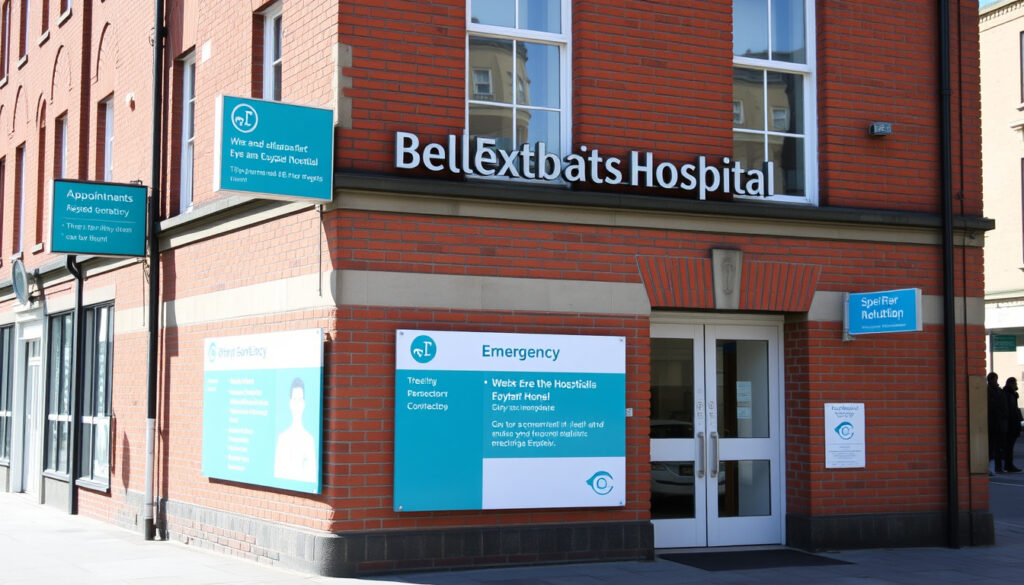
Eye and Ear Hospital Dublin: Location, Appointments & Emergencies
If you’re dealing with a sudden loss of vision, you probably won’t want to waste time figuring out where to go. The Royal Victoria Eye and Ear Hospital in Dublin has been handling serious eye and ENT cases since 1895 — but showing up unannounced isn’t an option. The hospital works as a national referral centre, which means knowing the right phone number and what steps to take before you go matters more than most patients realise.
Location: Adelaide Road, Dublin 2, D02 XK51 · Phone: 01 664 4600 · Founded: 1895 · National Referral Centre: Eye and Ear, Nose & Throat disorders · A+E Contact: 01 664 4600 for appointments only
Quick snapshot
- Founded 1895, national specialist centre (Wikipedia history)
- Phone 01 664 4600 for all A+E contact (RVEEH official emergency page)
- No walk-in emergency service — triage by phone first (RVEEH referral policy page)
- Current outpatient appointment waiting times (not published on rveeh.ie)
- Exact scope of free services without a GP referral letter
- Whether pensioner cataract cost exemptions require a specific means test
- Ophthalmic triage: 8am–5pm Mon–Fri, 9am–5pm Sat–Sun (RVEEH referral page)
- ENT triage: 9am–4pm Mon–Fri only, no weekends (RVEEH referral page)
- GP Liaison Nurse available Mon 8am–6pm and Thu 8am–6:30pm (RVEEH referral page)
- After triage, RVEEH arranges same-day assessment or next available slot (RVEEH referral page)
- No walk-in option means delayed presentation can affect outcomes (RVEEH referral page)
- Community clinics like Vista Eye Clinic (Ranelagh) absorb non-urgent referrals (RVEEH referral page)
These key facts about the Royal Victoria Eye and Ear Hospital come from official hospital and government sources.
| Field | Value |
|---|---|
| Full Name | Royal Victoria Eye and Ear Hospital |
| Address | Adelaide Road, Dublin 2, D02 XK51 |
| Main Phone | 01 664 4600 |
| A+E Phone | 01 664 4600 |
| Website | www.rveeh.ie |
| HSE Page | www2.hse.ie/services/hospitals/royal-victoria-eye-and-ear-hospital-dublin/ |
Where is the Eye and Ear Hospital?
The Royal Victoria Eye and Ear Hospital sits on Adelaide Road in Dublin 2, with the official Eircode D02 XK51. It’s a short walk from St. Stephen’s Green on the south side of the city centre, making it accessible by foot if you’re coming from most central locations.
For those using public transport, several Dublin Bus routes stop near the hospital on Adelaide Road. The nearest Dublin Metrolink stop is projected for St. Stephen’s Green, though construction timelines remain uncertain. For now, Bus Éireann routes and Dublin Bus services provide the most direct access.
Directions to Royal Victoria Eye and Ear Hospital Dublin
If you’re driving, there’s no dedicated RVEEH car park — street parking in Dublin 2 can be limited during peak hours. The RVEEH official location page (www.rveeh.ie/visitors/location/) links directly to Google Maps for real-time routing. Patients coming from outside Dublin should note that the M50 ring road provides the most straightforward route for those arriving from the north, south, east, or west.
- From Dublin Airport: approximately 30 minutes by car via M1/M50 southbound
- From Heuston Station: approximately 15 minutes by taxi or bus (40, 41, 123 routes)
- From Connolly Station: approximately 10 minutes by Luas Red Line to St. Stephen’s Green, then 5-minute walk
What bus goes to the Eye and Ear Hospital
Dublin Bus routes 4, 7, 8, 15, 27, 46A, 61, and 123 all serve Adelaide Road or the surrounding streets. The Research Foundation Dublin transport guide lists the 4, 7, and 8 as the most frequent options during standard hours. Patients relying on public transport should check real-time departures on the TFI Live app, as delays on Adelaide Road can affect arrival times for scheduled appointments.
Planning your route before the day and building in a 15-minute buffer for potential bus delays in the Dublin 2 area prevents missed appointments at this busy specialist centre.
The pattern for reaching RVEEH by public transport is straightforward: most routes from the city centre involve a short walk from Adelaide Road stops.
Can you walk into Eye and Ear Hospital?
No. The Royal Victoria Eye and Ear Hospital does not accept walk-in patients at its emergency department. According to RVEEH policy, all patients seeking emergency care must first contact the hospital by phone for triage assessment. Showing up unannounced means you’ll be turned away and advised to call instead.
Emergency Department details
The ophthalmic telephone triage line runs Monday to Friday from 8am to 5pm, and Saturday to Sunday from 9am to 5pm. The ENT triage service operates on a more restricted schedule — Monday to Friday only, from 9am to 4pm, with no weekend cover at all. Both services use the same main phone number: 01 664 4600.
For extremely serious cases — chemical injuries, penetrating eye injuries, or active bleeding — the hospital instructs patients to alert security immediately upon arrival. These are the only circumstances where presenting without prior triage contact may be warranted, and even then, calling ahead while en route is strongly advised.
Eye and Ear Hospital Dublin emergency
If you need emergency eye care outside RVEEH’s operating hours, the hospital’s own guidance directs northside Dublin patients to call D-DOC at 1850 22 44 77, and southside patients to call EDOC at 01-2234500. These out-of-hours services handle urgent calls when RVEEH’s triage lines are closed.
For under-14s with eye emergencies, CHI Temple Street Children’s Emergency Department (tel 01 878 4274) handles paediatric cases. RVEEH’s ENT department specifically does not see patients under 14 years old — younger children with ENT emergencies must go to a paediatric hospital instead. Neonatal babies with eye concerns should be referred back to neonatal services, not presented to RVEEH.
The phone-first policy exists because RVEEH is a national referral centre — it receives cases from GPs and optometrists across Ireland, which means in-person demand often exceeds capacity. Calling ahead helps the team prioritise genuine emergencies over conditions that could wait for a community optician.
The implication is clear: RVEEH’s national referral status means the phone-first system exists to protect capacity for the most serious cases across Ireland.
What eye condition is considered an emergency?
According to RVEEH guidance, emergencies include sudden vision loss, chemical burns to the eye, penetrating injuries, significant trauma causing bleeding, and acute glaucoma. If you’re unsure whether your condition qualifies, RVEEH’s triage nurses can advise over the phone — that’s precisely what the phone-first system is designed for.
Do you need a referral letter for the Eye and Ear Hospital?
Yes — for the emergency department specifically, you need either a GP referral or an optician/optometrist referral letter. Without one, you’ll face a €100 government levy added to your emergency department attendance fee. The hospital’s official guidance makes this clear: walk-ins without referral documentation are not accepted, and the financial penalty exists precisely to discourage unscheduled attendances.
Common reasons for referral
GPs and optometrists refer patients to RVEEH for conditions including retinal detachment, acute uveitis, severe eye infections, sudden vision changes that may indicate stroke or neurological involvement, complex cataract cases requiring surgery, and specialist ENT conditions like suspected throat cancer or advanced hearing disorders. The hospital’s referral criteria prioritise conditions that require specialist equipment or expertise not available in community settings.
- Sudden or painful vision loss
- Retinal detachment symptoms (flashes, floaters, curtain over vision)
- Acute glaucoma with pressure and pain
- Chemical or thermal eye injuries
- Complex ENT conditions requiring specialist assessment
- Paediatric eye conditions beyond general optometry scope
What are three common reasons for a referral?
Based on RVEEH referral patterns, the three most common reasons for GP or optician referrals are sudden vision changes (often indicative of retinal or neurological issues), chronic eye conditions that have worsened and require specialist intervention, and ENT conditions involving the ear, nose, or throat that need equipment only available at a specialist centre. These three categories account for the majority of referrals received by the hospital’s emergency department each week.
For emergency referrals, GPs can send documentation via Healthlink (the Irish health sector’s secure messaging system) or directly to ed.reception@rveeh.ie. Referrals received after 5pm are processed the next morning — so if a patient’s condition deteriorates overnight while awaiting confirmation, the referring GP should advise the patient to attend the nearest general emergency department rather than wait for RVEEH contact.
Patients should not email RVEEH’s emergency department directly for urgent queries — the inbox is monitored for referral letters from healthcare professionals, not patient enquiries. If you need urgent advice as a patient, your GP or optician should be your first point of contact.
What this means for patients is simple: always engage your GP or optician before calling RVEEH — that one step determines whether you pay €0 or €100.
Appointments – Royal Victoria Eye and Ear Hospital
Outpatient appointments at RVEEH work differently from the emergency department. For routine outpatient visits, you need a GP referral letter addressed specifically to the Appointments Office. Unlike the emergency department, outpatient referrals can be submitted via Healthlink, by post, or through the hospital’s postal system — but hand-delivery is not accepted according to the official appointments page on rveeh.ie.
Eye and Ear Hospital Dublin Appointments
Once RVEEH receives your referral, the Appointments Office will contact you to schedule a date. The hospital does not publish specific waiting times on its public-facing website, which means the actual wait depends on your condition’s urgency, the specific department, and current capacity. The RVEEH appointments page advises patients to notify the hospital in advance if they’re unable to attend a scheduled appointment — failing to show without notice can result in removal from the waiting list.
- Prepare your GP referral letter or Healthlink confirmation number
- Bring your current glasses (distance and reading) — the hospital requires this for comparison
- Eye examinations often involve pupil dilation, which blurs vision for several hours — do not drive to your appointment
- Bring sunglasses for the journey home
- Arrive 10–15 minutes before your scheduled time for check-in
Eye and ear hospital waiting list
The outpatient waiting list at RVEEH varies by department and condition severity. Urgent cases are prioritised, which means non-urgent referrals may wait longer than patients with acute conditions. For a current estimate, patients with referrals already submitted should contact the Appointments Office directly using the number on their appointment letter.
As a national specialist centre, RVEEH receives referrals from across Ireland, which puts pressure on its outpatient capacity. Patients willing to travel to community ophthalmology providers like Vista Eye Clinic in Ranelagh (tel 01 498 6920) may find shorter wait times for non-complex conditions — Vista is specifically recommended by RVEEH for community-based follow-up care.
If you’ve been referred but haven’t heard from RVEEH within the expected timeframe for your condition, call the Appointments Office — the hospital’s postal delays and referral processing times can add weeks to an already long wait.
The catch for outpatient care is that postal processing can add weeks to your wait — calling the Appointments Office directly gives you a current picture rather than waiting passively.
Is the Eye and Ear Hospital free?
Partially. Emergency department attendance at RVEEH costs €100 if you don’t have a medical card or a valid referral letter from a GP or optician. This is the standard government levy applied across Irish emergency departments for patients without medical card coverage. If you have a medical card, the emergency department visit is generally free — but always confirm with the hospital’s reception at the time of attendance.
Do pensioners have to pay for cataract surgery?
Cataract surgery at RVEEH is typically covered under the Treatment Purchase Fund or public hospital surgicalwaiting list schemes for medical card holders. However, the specifics depend on your medical card status, your income, and whether you’re classified as a public or private patient. Patients over 66 with a full medical card generally qualify for free cataract extraction surgery at public hospitals, but those with limited means-tested cover may face charges.
For patients without medical cards, the full cost of cataract surgery at a public hospital like RVEEH can run to several hundred euro per eye. Private cataract surgery through clinics like UPMC or independent ophthalmologists can cost €2,000–€3,000 per eye. The HSE’s Treatment Purchase Fund offers a limited number of funded slots for patients on long public waiting lists, but availability changes quarterly.
What conditions qualify for free eye tests?
Free eye tests under the HSE’s Medical Card scheme cover conditions including glaucoma screening for those with family history, diabetic retinopathy screening through the National Screening Service, and children under 16 (or under 22 in full-time education). Routine vision tests for adults without medical cards typically cost €50–€80 at high street opticians.
At RVEEH specifically, the free services depend on your referral type. GP-referred ophthalmology appointments are free for medical card holders. Optician-referred emergency eye assessments are free if the optician determines the condition meets emergency criteria — but if RVEEH triage staff determine the condition was non-urgent, the €100 levy may apply retroactively.
The €100 levy exists to discourage non-urgent presentations — but it also creates a barrier for patients unsure whether their symptoms warrant emergency attention. If your GP or optician has seen your condition, get their referral before calling RVEEH — that one step determines whether you pay €0 or €100.
The pattern is consistent: the referral letter is the gatekeeper to free emergency care at RVEEH.
How to get to RVEEH — step by step
Based on official RVEEH and HSE protocols, here’s a practical guide for accessing the hospital depending on your situation.
- Determine whether you need emergency or routine care. Sudden vision loss, injury, or acute pain = emergency. Ongoing issues, stable conditions, or routine check-ups = outpatient referral.
- For emergencies: call 01 664 4600. Describe your symptoms to the triage nurse. They’ll advise whether to attend RVEEH, visit a general ED, or call an out-of-hours service. Do not travel to RVEEH without calling first.
- For outpatient appointments: get a GP referral. Ask your GP to address the letter to the Appointments Office and send it via Healthlink or post. Hand-delivery is not accepted.
- Bring your referral confirmation and glasses. For eye appointments, expect pupil dilation. Arrange transport home — don’t drive.
- If you’re under 14 or a neonatal baby: Go directly to CHI Temple Street or your nearest paediatric hospital. RVEEH does not treat patients under 14 for ENT, and neonatal eye concerns go to neonatal services.
- If you’re outside Dublin and need emergency eye care: Contact your nearest regional emergency department. Cork University Hospital (tel 021 492 0200), University Hospital Galway (tel 091 544 544), University Hospital Limerick (tel 061 301 111), and University Hospital Waterford (tel 051 842000) all have ophthalmology cover.
What we confirmed
- RVEEH address: Adelaide Road, Dublin 2, D02 XK51 (confirmed via RVEEH location page)
- Phone number for all A+E contact: 01 664 4600 (confirmed via RVEEH emergency page)
- No walk-in emergency service — phone triage is mandatory (confirmed via RVEEH referral page)
- Ophthalmic triage: 8am–5pm weekdays, 9am–5pm weekends (confirmed via RVEEH referral page)
- ENT triage: 9am–4pm weekdays only, age 14+ (confirmed via RVEEH referral page)
- €100 levy for attendance without GP/optician referral (confirmed via RVEEH referral page)
- GP referrals via Healthlink or ed.reception@rveeh.ie (confirmed via RVEEH referral page)
- Outpatient referrals via post or Healthlink only, not hand-delivery (confirmed via RVEEH appointments page)
What remains unclear
- Current outpatient appointment waiting times (not published on rveeh.ie)
- Whether specific pensioner income thresholds apply for free cataract surgery, or whether a full medical card is the sole requirement
- The exact scope of conditions RVEEH classifies as emergency versus non-urgent during triage
- Specific out-of-hours on-call procedures beyond the D-DOC and EDOC phone numbers
- Whether Mater Eye ED and RVEEH publish comparative outcomes or success rate data
“There is currently no walk-in emergency service.”
— Royal Victoria Eye and Ear Hospital policy page
“The eye emergency department is separate from the main emergency department… you need a referral letter from your GP/optometrist/optician sent in via the EED email.”
— Mater Misericordiae University Hospital Eye ED guidance
The implication is straightforward: RVEEH’s national referral status means it functions as a specialist hub, not a walk-in clinic. The phone-first triage system exists because demand from across Ireland consistently outstrips capacity. Patients who understand this and follow the referral process get seen faster — those who arrive unannounced pay a financial penalty and still don’t get seen.
For patients across Ireland, the clear path is: call your GP or optician first, get a referral, and know the number. Dublin residents without urgent conditions can also consider community ophthalmology services like Vista Eye Clinic in Ranelagh (tel 01 498 6920) for faster access to non-emergency specialist care. The system is designed to work when you engage with it correctly — the €100 levy is the penalty for not doing so.
Related reading: How Much REM Sleep Do We Need? Amounts by Age & Tips · What Is a Dangerous PSA Level – Charts by Age & Risks
Frequently asked questions
What bus goes to the Eye and Ear Hospital?
Dublin Bus routes 4, 7, 8, 15, 27, 46A, 61, and 123 all serve Adelaide Road or nearby streets. The 4, 7, and 8 are among the most frequent options during standard hours. For real-time departures, check the TFI Live app before you travel.
Do pensioners have to pay for cataract surgery?
Pensioners with a full medical card generally qualify for free cataract surgery at public hospitals like RVEEH. Those without medical cards may face charges ranging from several hundred to a few thousand euro per eye, depending on whether they’re treated as public or private patients. The HSE’s Treatment Purchase Fund offers limited funded slots for patients on long public waiting lists.
What conditions qualify for free eye tests?
Free eye tests under the HSE Medical Card scheme include glaucoma screening for those with a family history of the condition, diabetic retinopathy screening through the National Screening Service, and children under 16 (or under 22 in full-time education). Routine vision tests for adults without medical cards typically cost €50–€80 at high street opticians.
What are three common reasons for a referral?
The three most common referral reasons to RVEEH are sudden vision changes (often retinal or neurological), chronic eye conditions that have worsened and require specialist intervention, and complex ENT conditions needing equipment only available at a specialist centre. These three categories account for the majority of referrals received weekly.
Royal Victoria Eye and Ear Hospital Dublin reviews?
Patient reviews for RVEEH are limited on public platforms, but the hospital’s reputation as Ireland’s national specialist eye and ENT centre is well-established. As a teaching hospital affiliated with Trinity College Dublin and a national referral centre, it handles complex cases that community hospitals cannot. The key for patients is managing expectations around wait times and understanding that the referral-first system prioritises genuine emergencies.
What is the Eye and Ear Hospital Dublin phone number?
The main phone number for all RVEEH emergency department and general enquiries is 01 664 4600, confirmed on RVEEH official emergency page. Call this for ophthalmic triage (8am–5pm weekdays, 9am–5pm weekends) and ENT triage (9am–4pm weekdays only). The same number handles appointment-related calls during office hours.
Eye and Ear Hospital waiting list?
The outpatient waiting list at RVEEH varies by department, condition urgency, and current capacity. As a national specialist centre receiving referrals from across Ireland, demand consistently exceeds supply. The hospital doesn’t publish specific waiting times publicly — patients with active referrals should contact the Appointments Office for current estimates.
More related posts
 How to Play Blackjack: Rules, Tips & Strategy Guide
 130 Pounds in Euros: Current Rate & Best Conversion Options
 It Was Just an Accident (2025): Reviews, Plot & Streaming
 Portrait of a Lady on Fire – Plot, Ending Explained & Themes
 What Do I Need for NCT? Complete Guide & Checklist 2026
 Rhesus Negative Blood Type: What It Is and Why It Matters
 What Is an Enzyme? Definition, Function & Examples
 Croí Laighean Credit Union – Services and Membership Guide