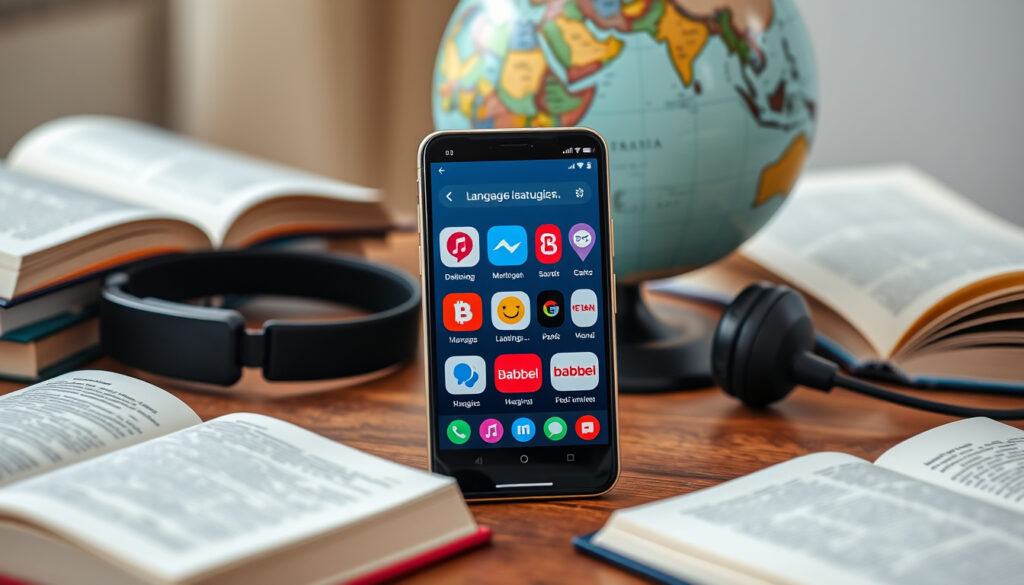
Where to Learn Languages for Free: Best Apps and Websites
Free language apps like Duolingo offer extensive courses without payment, but their free tiers come with ads and limits. This article weighs the best free apps and websites, separating what works from what’s just marketing.
Languages available on Duolingo: Over 40 ·
Babbel courses offered: Over 5,000 ·
Prominent free language learning apps: Duolingo, Memrise, Busuu
Quick snapshot
- Duolingo offers a free tier with ads and hearts (PCMag (tech review authority))
- Babbel requires a paid subscription after a free trial (Wirecutter (consumer testing lab))
- Memrise and Busuu have free limited access (Copycat Cafe (language learning blog))
- Whether free apps alone can lead to conversational fluency (Taalhammer (science-based review))
- Exact number of active users on each platform (talkREAL (expert testing blog))
- How much speaking practice is available for free across all platforms (Copycat Cafe (language learning blog))
- Whether combining two free apps yields results equal to a paid subscription (Copycat Cafe (language learning blog))
- Whether the web version of Duolingo completely eliminates all ads (Copycat Cafe (language learning blog))
- PCMag’s 2026 review reaffirms Duolingo as the top free app (PCMag (tech review authority))
- talkREAL’s 2025 roundup reflects recent expert testing (talkREAL (expert testing blog))
- Combining two apps—one for habit, one for speaking—may yield best results (Copycat Cafe (language learning blog))
- New AI conversation tools like Langua are expanding free tiers (Copycat Cafe (language learning blog))
The table below captures the key pricing and feature differences.
| Category | Detail | Source |
|---|---|---|
| Duolingo pricing | Free with ads; Super Duolingo $6.99/mo | PCMag |
| Babbel pricing | $13.95/mo for 1-month plan | Wirecutter |
| Number of languages on Babbel | 14 | Copycat Cafe |
| Number of languages on Duolingo | Over 40 | Copycat Cafe |
| Free trial length Babbel | 7 days | Wirecutter |
| Memrise free tier | Basic courses free; premium unlocks full features | Copycat Cafe |
| Busuu free tier | Limited lessons free; premium for complete courses | Copycat Cafe |
| Drops languages | Over 55 languages with free 5-min sessions | Drops (official site) |
What is the best free app for learning languages?
Duolingo
- Free core course with ads and a hearts system (PCMag)
- Over 40 languages available (Copycat Cafe)
- Gamified lessons build daily habits (PCMag)
PCMag calls Duolingo “the best free language-learning app” and notes it topped both the Apple App Store and Google Play Education charts. The sheer breadth of languages and the stickiness of its gamification make it the first stop for most new learners.
Duolingo is the undisputed free leader, but its hearts system and ads push committed learners toward the paid tier. For casual exploration, it’s unbeatable.
Babbel
- Paid subscription after a 7-day free trial (Wirecutter)
- 14 languages with structured courses (Copycat Cafe)
- Conversation-focused methodology (Taalhammer)
Babbel offers more depth per language than Duolingo, but its cost is a barrier. The 7-day trial gives a taste, but after that it’s $13.95/month.
Memrise
- Free basic courses with spaced repetition (Copycat Cafe)
- Community-created content adds variety (Copycat Cafe)
- Premium unlocks grammar and speaking features (Copycat Cafe)
Memrise is strong for vocabulary building, but its free tier leaves out key speaking practice. Still, the core SRS system works well on a budget.
Busuu
- Free limited lessons with social feedback from native speakers (Copycat Cafe)
- 14 languages available (Copycat Cafe)
- Premium unlocks full courses and offline access (Copycat Cafe)
Busuu’s social feature—getting corrections from native speakers—is unique among free options, but the free tier is too thin to rely on alone.
What this means: For a fully free experience, Duolingo is the clear champion. Babbel, Memrise, and Busuu each offer something valuable, but their best features sit behind paywalls.
Is Babbel or Duolingo better?
Four dimensions separate these two giants: cost, methodology, language range, and user experience.
Cost comparison
- Duolingo: Free with ads; Super Duolingo $6.99/month (PCMag)
- Babbel: $13.95/month for 1-month plan (Wirecutter)
Teaching methodology
- Duolingo uses gamification and spaced repetition (PCMag)
- Babbel focuses on real-world conversation and grammar (Copycat Cafe)
Language selection
- Duolingo: Over 40 languages (Copycat Cafe)
- Babbel: 14 languages (Copycat Cafe)
User experience
- Both have polished mobile apps, but Duolingo’s web version has fewer restrictions (Copycat Cafe)
Duolingo wins on price and breadth; Babbel wins on depth and structure. A learner who can afford $13.95/month may prefer Babbel’s rigor; a learner who can’t pay gets more from Duolingo’s free tier than from a 7-day trial.
Why this matters: The choice isn’t just about features—it’s about whether you can sustain a paid subscription long enough to reach fluency. For most self-directed learners, Duolingo’s free tier is the safer bet.
Is Duolingo always free?
Free tier features
- Free users get complete courses with ads (PCMag)
- Hearts system limits mistakes—you earn more by practicing (Copycat Cafe)
Super Duolingo premium
- Removes ads and gives unlimited hearts (PCMag)
- Costs $6.99/month (PCMag)
Ads and limitations
- Ads appear between lessons; no option to pay to remove individually (Copycat Cafe)
- Hearts regeneration limited on mobile; web version has no hearts system (Copycat Cafe)
How to avoid paying
- Use the web version (no hearts, fewer ads) (Copycat Cafe)
- Earn hearts by practicing mistakes (Copycat Cafe)
- Join friend quests for unlimited energy (Copycat Cafe)
The catch: Duolingo is free—but the friction of ads and hearts is designed to nudge you toward a $6.99/month subscription. The web version is the most effective loophole for staying free.
How to use Duolingo without paying?
- Earn hearts by practicing mistakes to recharge them.
- Use the web version which has no hearts system and fewer ad interruptions.
- Use friend referrals to earn free Super Duolingo days.
- Use Duolingo for Schools (free for teachers and students) which removes all limits and ads.
Earning hearts
- Practice mistakes to recharge hearts (Copycat Cafe)
- Heart regeneration takes time; plan sessions accordingly (Copycat Cafe)
Using the web version
- No hearts system on web—unlimited mistakes (Copycat Cafe)
- Fewer ad interruptions than mobile (Copycat Cafe)
Friend referrals
- Earn free Super Duolingo days by referring friends (Copycat Cafe)
Classroom settings
- Duolingo for Schools is free for teachers and students (Copycat Cafe)
- Classroom accounts remove limits and ads (Copycat Cafe)
What this means: The web version is the single best workaround. For students or teachers, Duolingo for Schools removes all restrictions entirely. For everyone else, friend quests and heart practice keep the free experience sustainable.
What are the best websites for learning languages for free?
Duolingo
Duolingo’s website mirrors the app with full course access and no hearts system. It’s a free resource for over 40 languages (Copycat Cafe).
Memrise
Memrise’s website offers community-created courses and basic SRS tools for free (Copycat Cafe).
BBC Languages
BBC Languages provides free courses for many languages, though the site is no longer actively updated. Its archived content still offers solid beginner lessons (Wirecutter).
Open Culture
Open Culture aggregates free language learning resources from universities and public libraries, covering dozens of languages (Wirecutter).
Coursera free courses
Coursera offers free audit options for language courses from universities. You get access to video lectures but not graded assignments (Wirecutter).
Why this matters: Websites often escape the restrictions of mobile apps. BBC Languages and Open Culture are hidden gems for learners who prefer structured lessons over gamified quick hits.
How much does Babbel cost per month?
Monthly subscription price
- $13.95/month for a 1-month plan (Wirecutter)
Discounts for longer plans
- 3-month plan: about $8.95/month (Wirecutter)
- 12-month plan: about $6.65/month (Wirecutter)
Free trial length
- 7-day free trial, then full price (Wirecutter)
Comparison with Duolingo cost
- Duolingo: free with ads; Super Duolingo $6.99/month (PCMag)
- Babbel’s annual plan ($6.65/month) is slightly cheaper than Super Duolingo ($6.99/month), but Babbel’s free tier is nonexistent after 7 days (Wirecutter)
The pattern: Babbel’s pricing is competitive when you commit long-term, but the lack of a permanent free tier makes it a paid-only platform. Duolingo’s free option remains the budget winner.
Babbel’s annual plan costs less per month than Super Duolingo, yet most learners never reach that commitment. The 7-day trial is too short to decide—so many either stick with Duolingo free or overpay month-to-month.
This paradox highlights that the perceived value of each app depends on the learner’s ability to commit long-term.
Comparison: Free tiers of major language apps
Four apps, one consistent pattern: the free tier gives a taste, the premium holds the meat.
| Feature | Duolingo | Babbel | Memrise | Busuu |
|---|---|---|---|---|
| Free access duration | Unlimited (with ads) | 7-day trial | Unlimited (basic courses) | Unlimited (limited lessons) |
| Number of languages | 40+ | 14 | Many (community courses) | 14 |
| Core methodology | Gamification + SRS | Structured curriculum | Spaced repetition | Social feedback + SRS |
| Ads in free tier | Yes | No (trial only) | Minimal | Minimal |
| Premium cost | $6.99/mo | $6.65–13.95/mo | $8.49/mo | $9.99/mo |
| Offline downloads | Premium only | Premium only | Premium only | Premium only |
The trade-off: Duolingo offers the most generous free tier by far. Memrise comes second, but its free courses are limited to basic vocabulary. Babbel and Busuu essentially require payment to progress beyond the first few lessons.
Specs table: Key specifications of free language learning platforms
Six specs that matter when choosing a free resource—and how they stack up.
| Specification | Duolingo | Babbel | Memrise | Busuu |
|---|---|---|---|---|
| Price per month (free tier) | $0 | $0 for 7 days | $0 | $0 |
| Premium price per month | $6.99 | $6.65 (annual) | $8.49 | $9.99 |
| Languages available (free) | 40+ | 14 (trial) | Many (community) | 14 |
| Methodology | Gamified SRS | Structured grammar | Spaced repetition | Social learning |
| Mobile app rating (App Store) | 4.7 | 4.6 | 4.5 | 4.4 |
| Offline mode | Premium | Premium | Premium | Premium |
Why this matters: Duolingo leads on language count and free access. Babbel leads on structured depth. Memrise and Busuu occupy distinct niches (vocabulary and social feedback, respectively).
Pros and cons of free language learning apps
Upsides
- Zero financial commitment to start
- Low barrier to daily practice (Duolingo’s 5-minute habit)
- Multiple apps can be combined for free (e.g., Duolingo + Memrise)
- Access to community content and native speaker feedback (Busuu)
- Web versions bypass mobile restrictions
Downsides
- Ads and limits (hearts, lesson caps) hinder progress
- No offline access without premium
- Limited speaking practice behind paywalls
- Free tiers often lack grammar explanations
- Risk of quitting if motivation drops without investment
The pattern: Free apps are excellent for habit-building and vocabulary, but they fall short for structured speaking and grammar. The solution? Pair a free app like Duolingo with a cheap or free resource like Anki for flashcards (Wirecutter).
Clarity: What’s confirmed and what’s not
Confirmed facts
- Duolingo offers a free tier with ads and hearts (PCMag)
- Babbel requires a paid subscription after a 7-day trial (Wirecutter)
- Memrise and Busuu have free limited access (Copycat Cafe)
- Duolingo covers over 40 languages (Copycat Cafe)
- Babbel offers 14 languages (Copycat Cafe)
What’s unclear
- Whether free apps alone can lead to conversational fluency (Taalhammer)
- Exact number of active users on each platform (talkREAL)
- How much speaking practice is available for free across all platforms (Copycat Cafe)
This clarity table summarizes the knowns and unknowns for free language learning.
What users say: quotes from the platforms
Duolingo is the world’s most popular language learning method. It’s free, fun, and effective.
Duolingo official site
Babbel has over 5,000 courses and more than 60,000 lessons across 14 languages.
Babbel App Store description
PCMag’s 2026 review states Duolingo remains the best free app regardless of learner level or language goals.
PCMag
Wirecutter identifies Anki as a free, open-source flashcard app popular with language learners.
Wirecutter
These quotes reflect the market leaders’ own claims and third-party validations.
Summary: The real cost of free
Free language apps are a genuine gateway—but they are not a classroom. The best strategy is to combine Duolingo for daily habits with a spoken practice tool like Langua or a flashcard system like Anki. For learners in the U.S. or Europe, the most effective path is to start with Duolingo’s free tier on the web, supplement with Memrise for vocabulary, and only upgrade to a paid plan when the free restrictions become a real barrier. For the budget-constrained learner, the choice is clear: stick with Duolingo’s web version and supplement with free resources, or pay for Babbel only if you commit to a full year.
Related reading: Translate English to Tamil: Typing, Voice & Scan Methods · Google Translate English to French: Tips & Quirks Explained
taalhammer.com, youtube.com, reddit.com, polychatapp.com, reddit.com, smarterlanguage.com
Readers looking for a detailed comparison of free language learning tools can explore free language learning apps and websites for a curated list of apps and websites.
Frequently asked questions
Is Memrise free?
Yes, Memrise offers free basic courses. Premium unlocks grammar, speaking practice, and offline mode.
What languages are available on Busuu for free?
Busuu offers 14 languages in its free tier, but lessons are limited to beginner and early intermediate levels.
Can I learn French for free with these apps?
Yes, Duolingo offers a full French course for free. Memrise and Busuu also have French content in their free tiers.
Are free language apps effective for beginners?
They are effective for building vocabulary and basic sentence structure, but speaking and grammar depth usually require a paid tier or supplementary resources.
Do I need to create an account to use Duolingo?
Yes, an account is required to track progress. It’s free and can be created with an email or social login.
Can I use Duolingo offline for free?
No, offline mode is a premium feature of Super Duolingo.
More related posts
 Texts and Tests 4: PDF, Solutions & Online Access
 Things to Do in Abu Dhabi – Top Attractions and Itineraries
 What Size is A5 Paper? Dimensions in mm, cm, Inches
 Countries in North America – Complete List, Map & Facts
 Best Series on Netflix Ireland: Top 10, Ratings & New Shows
 Barca vs Real Madrid: Head-to-Head Stats & History
 2026 FIFA World Cup UEFA Qualification Schedule: Dates & Fixtures
 Bear With Me or Bare With Me? Correct Spelling