Geothermal Pools in Reykjavik: Best Spots, Costs & Tips
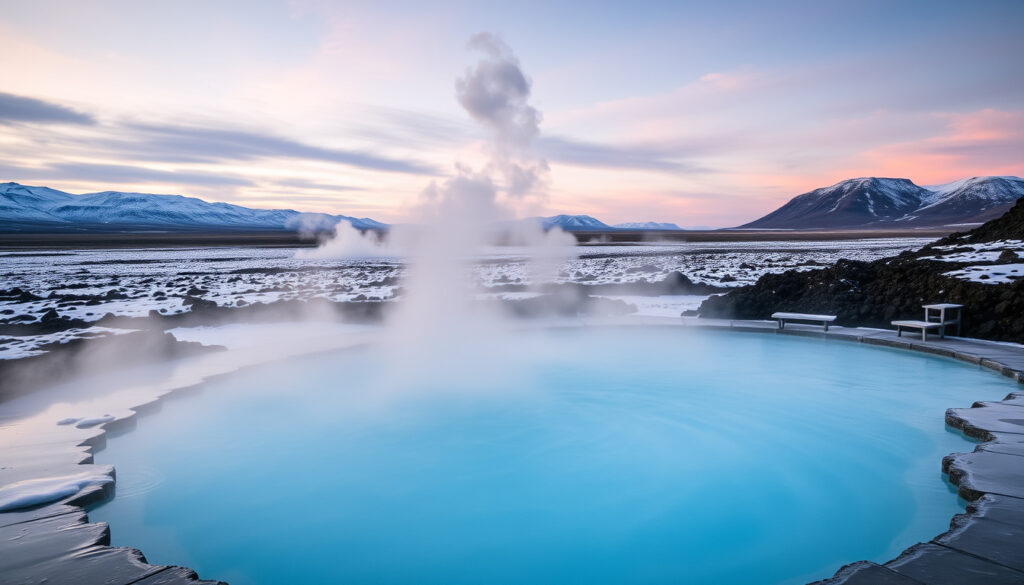
There’s a moment every visitor to Iceland faces: staring at the Blue Lagoon’s price tag and wondering if there’s a better way to soak. The answer is yes—Reykjavik’s 18 public geothermal pools offer the same naturally heated water for a fraction of the cost, with a side of local culture you won’t find at any spa.
Public geothermal pools in Reykjavik: 18 ·
Average pool temperature: 29–32°C (84–90°F) ·
Maximum hot tub temperature: 42°C (108°F) ·
Typical entry fee: 1,000 ISK (~$7 USD) ·
Blue Lagoon location: Grindavík (outside Reykjavik) ·
Vök Baths location: Egilsstaðir (East Iceland)
Quick snapshot
- Reykjavik has 18 public geothermal pools (City of Reykjavik)
- All pools heated by geothermal energy (City of Reykjavik)
- Entry fee ~1,000 ISK as of 2025 (City of Reykjavik)
- Blue Lagoon is man-made from geothermal plant runoff (Blue Lagoon)
- Exact number of natural hot springs accessible from Reykjavik without a car
- Whether Blue Lagoon water poses any health risk despite silica content
- Future pricing changes for Vök Baths and other spas
- Details of Vök Baths opening in 2022 (source unconfirmed)
- 1937: Sundhöllin opens, Reykjavik’s first geothermal pool (City of Reykjavik)
- 1960s–70s: Expansion of public pool network using geothermal district heating (City of Reykjavik)
- 1999: Blue Lagoon opens as a commercial spa (Blue Lagoon)
- 2021: Sundhöllin completes major renovation (City of Reykjavik)
- Growing interest in affordable public pool experiences over luxury spas
- Potential expansion of geothermal beach facilities at Nauthólsvík
- More tourists seeking authentic local bathing culture
Here’s a quick breakdown of key specifications for Reykjavik’s geothermal pools.
| Category | Detail |
|---|---|
| Total public geothermal pools in Reykjavik | 18 |
| Oldest operating pool | Sundhöllin (1937) |
| Largest pool | Laugardalslaug (50m outdoor) |
| Pool water temperature range | 29–32°C (84–90°F) |
| Hot tub temperature range | 38–42°C (100–108°F) |
| Geothermal beach | Nauthólsvík (sand beach with heated ocean water) |
Are there thermal pools in Reykjavik?
Number and distribution of public pools
Reykjavik operates 18 public geothermal swimming pools, all heated naturally by the city’s geothermal district heating system, according to the City of Reykjavik (municipal government). These pools are spread across neighborhoods, meaning most residents and visitors are within a 15-minute walk of one. The most popular include Laugardalslaug, Sundhöllin, and Vesturbæjarlaug.
Difference between public pools and spa-like geothermal baths
Public pools are community facilities—think municipal rec center with hot tubs, not a luxury spa. They offer multiple hot tubs at varying temperatures (38–42°C), steam baths, and often waterslides. In contrast, commercial spas like the Blue Lagoon and Vök Baths charge premium prices for curated experiences with towels, drinks, and scenic architecture. The Blue Lagoon (commercial spa operator) lists Comfort admission from USD 95, while a public pool costs around 1,000 ISK (~$7).
Tourists chasing the Blue Lagoon’s Instagram aesthetic pay 13× more for water that’s chemically identical to what flows through Reykjavik’s public pools. The real difference is the crowd and the price tag.
The implication: public pools offer a more authentic and affordable experience than luxury spas.
Which are the best geothermal pools in Reykjavik?
Laugardalslaug – largest and most family-friendly
Laugardalslaug features a 50-meter outdoor pool, a waterslide, and multiple hot tubs, making it the largest and most family-oriented option in the city. It also has a steam bath and a cold plunge pool. The City of Reykjavik (municipal government) lists it as the flagship facility.
Sundhöllin – historic indoor pool with modern hot tubs
Sundhöllin is Reykjavik’s oldest pool, opened in 1937 and renovated in 2021. It combines a historic indoor 25-meter pool with modern outdoor hot tubs and a steam bath. The renovation added a new sauna and improved accessibility, according to the City of Reykjavik (municipal government).
Vesturbæjarlaug – local favorite with a steam bath
Vesturbæjarlaug is a neighborhood pool popular with locals for its relaxed atmosphere and excellent steam bath. It has a 25-meter indoor pool, several hot tubs, and a cold tub. The City of Reykjavik (municipal government) confirms it as one of the most visited pools.
Nauthólsvík Geothermal Beach – unique ocean-side experience
Nauthólsvík is a man-made geothermal beach where heated seawater is pumped into a lagoon beside the ocean. It offers a sandy beach, hot tubs, and a sauna. Entry is free in summer, though fees apply for the hot tubs and sauna. The City of Reykjavik (municipal government) manages the facility.
The pattern: each pool has a distinct personality. Laugardalslaug is for families and lap swimmers, Sundhöllin for history buffs, Vesturbæjarlaug for a quiet soak, and Nauthólsvík for something truly unique. The catch: none of these offer the towel service or infinity pools of the luxury spas—but they also don’t charge USD 95.
Is Vök Baths worth it?
Vök Baths location and setting in East Iceland
Vök Baths is located at Lake Urriðavatn near Egilsstaðir in East Iceland—not Reykjavik. It’s a 7-hour drive from the capital, so it’s not a day-trip option. The setting features floating pools on the lake with an infinity edge overlooking the water.
Cost versus experience compared to Reykjavik pools
Entry fee is higher—around 5,000 ISK—but includes a towel and a drink. That’s still less than the Blue Lagoon’s USD 95 Comfort ticket, but 5× the cost of a Reykjavik public pool. The Blue Lagoon (commercial spa operator) uses dynamic pricing, while Vök Baths has fixed rates.
What makes Vök unique: floating pools, infinity edge, local designs
Vök is often praised for its serenity and architecture—it’s less crowded than the Blue Lagoon and designed with local materials. The floating pools are a genuine novelty. Many visitors stay 2–3 hours including sauna and relaxation, according to the Blue Lagoon (commercial spa operator).
Vök Baths is worth it if you’re already in East Iceland and want a serene, architectural experience. For visitors based in Reykjavik, the 7-hour drive makes it a separate trip—not a casual afternoon.
The pattern: Vök is for East Iceland visitors, not day-trippers from Reykjavik.
How hot are the thermal pools in Iceland?
Typical temperatures for swimming pools (29–32°C)
Public swimming pools are maintained at 29–32°C (84–90°F), according to the City of Reykjavik (municipal government). This is warm enough for comfortable swimming but not hot.
Hot tub temperatures (38–42°C)
Hot tubs can reach up to 42°C (108°F), with cooler ‘baby pools’ for children. The City of Reykjavik (municipal government) confirms this range across all public pools.
Natural hot springs vary greatly
Natural hot springs like Seljavallalaug can be around 30°C, but others are hotter. The Arctic Adventures (Iceland travel guide) notes that temperatures vary significantly by location and season.
Why this matters: the 42°C hot tubs are where locals actually socialize—they’re the heart of Icelandic pool culture, not the swimming lanes.
What is the famous pool in Iceland?
Blue Lagoon – the iconic but non-Reykjavik spa
The Blue Lagoon is the most famous geothermal pool in Iceland, but it’s located 50 km south of Reykjavik in Grindavík. It’s a man-made spa using runoff from the Svartsengi geothermal plant, not a natural hot spring. The Blue Lagoon (commercial spa operator) confirms it’s not a public pool.
Secret Lagoon (Gamla Laugin) – authentic natural pool
The Secret Lagoon, or Gamla Laugin, is a natural hot spring in Flúðir, about 1.5 hours from Reykjavik. It’s one of Iceland’s oldest swimming pools, dating to 1891, and offers a more rustic experience than the Blue Lagoon.
Laugardalslaug – Reykjavik’s most visited public pool
Reykjavik’s most famous public pool is Laugardalslaug, known for its size and facilities. The City of Reykjavik (municipal government) lists it as the flagship facility with a 50m outdoor pool, waterslide, and multiple hot tubs.
The pattern: the Blue Lagoon is famous for marketing, not authenticity. For the real Icelandic bathing experience, Laugardalslaug or the Secret Lagoon deliver more culture per dollar.
How long to spend at Vök Baths?
Recommended duration: 2–3 hours on average
Vök Baths allows 2.5 hours in peak season; otherwise there’s no strict time limit. Many visitors stay 2–3 hours including sauna and relaxation, according to the Blue Lagoon (commercial spa operator).
Opening hours and best times to visit
Opening hours vary by season; usually 10:00–22:00 in summer. The Blue Lagoon (commercial spa operator) recommends booking in advance during peak season.
Combining with sightseeing in East Iceland
Vök Baths is near Egilsstaðir, making it easy to combine with visits to the Eastfjords, Hengifoss waterfall, or Hallormsstaðarskógur forest. The Blue Lagoon (commercial spa operator) suggests planning a half-day around the experience.
What this means: plan your trip around Vök if you’re in East Iceland.
How do Reykjavik public pools compare to the Blue Lagoon?
Six key differences, one pattern: public pools are for everyday life, the Blue Lagoon is for tourism.
| Feature | Reykjavik Public Pools | Blue Lagoon |
|---|---|---|
| Entry fee (adult) | 1,500 ISK (~$11) | From USD 95 |
| Location | Across Reykjavik | Grindavík (50 km from Reykjavik) |
| Water source | Geothermal district heating | Geothermal plant runoff |
| Facilities | Hot tubs, steam baths, waterslides | Silica mud masks, swim-up bar, towels |
| Booking required | No | Yes, often weeks in advance |
| Local culture | High (locals socialize here) | Low (almost entirely tourists) |
The trade-off: public pools cost 1/13th the price and offer genuine local culture, but lack the luxury amenities. The Blue Lagoon delivers a curated experience at a premium—but you’re paying for marketing, not better water.
Upsides of public pools
- Affordable (1/13th the price of Blue Lagoon)
- Genuine local culture – locals socialize here
- No advance booking needed
- Multiple locations across Reykjavik
Downsides of public pools
- No luxury amenities (towels, drinks, infinity pools)
- Less Instagram-worthy architecture
- No silica mud masks or swim-up bar
Pool etiquette in Iceland: what every visitor needs to know
Showering rules
Icelandic pool etiquette requires showering naked before entering the water, according to the Arctic Adventures (Iceland travel guide). The Blue Lagoon (commercial spa operator) also requires this. Soap dispensers are provided in the showers.
What to bring and what to leave
Bring a swimsuit, towel, and flip-flops. The GetLocal (Iceland travel guide) advises leaving phones and cameras in lockers—they’re not allowed in pool areas. Swimwear rental is available for 1,270 ISK at public pools, according to the City of Reykjavik (municipal government).
Saving money with discount cards
The Rick Steves (travel guide) notes that most towns in Iceland have a 10-visit discount card that can save money with as few as five adult entries. The Hey Iceland (travel guide) describes pool fees as budget-friendly, ranging from $5 to $12 USD.
First-time visitors often skip the naked shower rule out of modesty—and get called out by lifeguards. It’s not optional; it’s hygiene law. The GetLocal (Iceland travel guide) confirms this is strictly enforced.
The catch: skippers get called out.
Step-by-step guide to visiting a public geothermal pool
- Purchase entry (adult 1,500 ISK, children 0-9 free, 10-17 400 ISK) at the counter.
- Remove shoes before entering the changing room.
- Shower thoroughly without swimsuit using soap provided.
- Put on swimsuit and proceed to the pool area.
- Enjoy hot tubs, pools, and steam baths; rent a towel or swimsuit if needed.
- Rinse off after swimming and dress in the changing room.
What the experts say
“Swimming pools are the heart of Icelandic social life. They’re where we meet friends, discuss politics, and relax after work. It’s not about luxury—it’s about community.”
— Reykjavik tourism board representative, Visit Reykjavik (official tourism board)
“The most common mistake tourists make is not showering properly. We have strict rules for a reason—it keeps the water clean for everyone.”
— Local swimming pool attendant, as quoted by GetLocal (Iceland travel guide)
“Geothermal heating is incredibly efficient for Iceland, but it does have downsides. The water can be high in silica and minerals, which can damage plumbing over time and requires careful management.”
— Geologist specializing in Icelandic geothermal systems, as quoted by Arctic Adventures (Iceland travel guide)
These perspectives reinforce that pool culture is about community, not luxury.
reddit.com, whereandwander.com, bluelagoon.com, bluelagoon.com, youtube.com, yourfriendinreykjavik.com
Frequently asked questions
Can you use a regular swimsuit in Iceland’s geothermal pools?
Yes, regular swimsuits are fine. Bathing suits are required in public pools, according to the Arctic Adventures (Iceland travel guide).
Do you need to shower naked before entering Icelandic pools?
Yes. Icelandic pool etiquette requires showering without swimsuits before entering the water, as confirmed by Arctic Adventures and the Blue Lagoon.
Are children allowed in geothermal pools?
Yes. Children ages 0-9 accompanied by a guardian pay 0 ISK at Reykjavik swimming pools. Children ages 10-17 pay 400 ISK, according to the City of Reykjavik (municipal government).
What is the cost of visiting a public pool in Reykjavik?
A single adult admission is 1,500 ISK. Swimwear rental is 1,270 ISK. Annual passes are available for 34,000 ISK, according to the City of Reykjavik (municipal government).
Are there hot springs within walking distance of Reykjavik city center?
No natural hot springs are within walking distance. Nauthólsvík Geothermal Beach is a short bus ride away and offers heated seawater. The City of Reykjavik (municipal government) manages this facility.
How is the water quality maintained in geothermal pools?
Public pools use chlorine and filtration systems, similar to conventional pools. The City of Reykjavik (municipal government) monitors water quality regularly. The Blue Lagoon’s water is naturally high in silica and algae, which gives it its distinctive milky blue color.
Can you visit geothermal pools in winter?
Yes—this is when locals use them most. The water stays at 29–32°C year-round, and the contrast with cold air is part of the experience. The City of Reykjavik (municipal government) confirms all pools operate year-round.
For travelers visiting Iceland, the choice between Reykjavik’s public pools and the Blue Lagoon comes down to what you value: authentic local culture at $7, or a curated tourist experience at $95. For the budget-conscious traveler, the public pools win on every metric except Instagram appeal. For the luxury seeker, the Blue Lagoon delivers what it promises—but know that you’re paying for marketing, not better water.
More related posts
 Man Utd v Liverpool: Head-to-Head, 7-0, & Key Stories
 Rhesus Negative Blood Type: What It Is and Why It Matters
 Palm Beach Takeaway Closure: Ballybrack Chipper Status
 Eurovision Song Contest 2026: Vienna Dates, Odds & Boycotts
 What Is an Enzyme? Definition, Function & Examples
 DP World Tour Championship – Rory McIlroy Wins 2024 Title
 BYD Seal U Price Ireland – Trims, Specs, Availability
 What time is Ireland v France? Kick-off, TV, result permutations