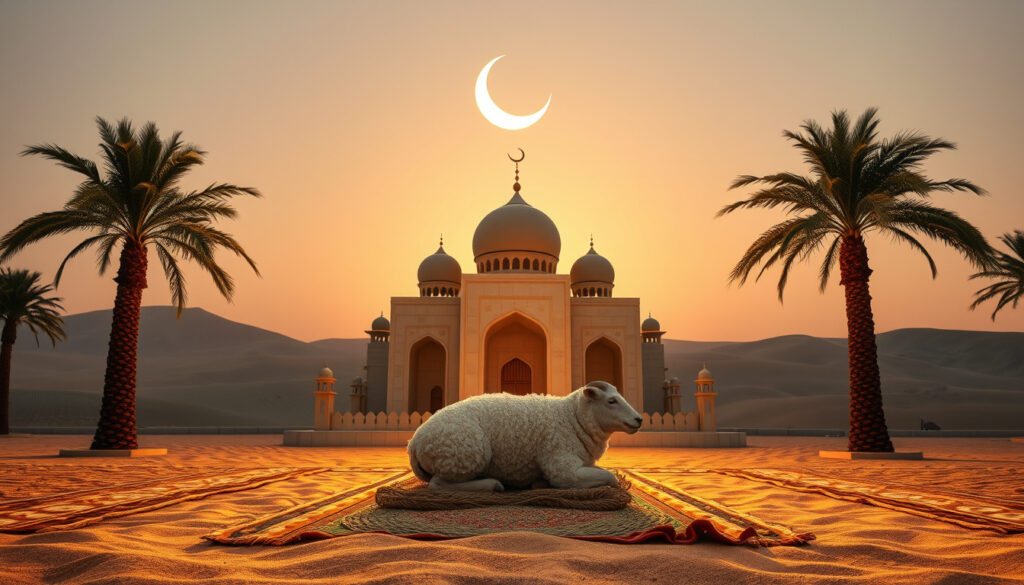
Eid ul Adha 2025: Confirmed Dates and Key Facts
If you’ve checked your calendar and noticed that Eid al-Adha seems to shift every year, you’re not alone. The Feast of Sacrifice follows the Islamic lunar calendar, which means its date moves about 11 days earlier each year in the Gregorian calendar. For 2025, that means celebrations starting on June 6 in most of the Middle East and Europe, and a day later in South Asia — a difference that comes down to a single moon sighting.
Expected start (West Asia, Europe, North America): June 6, 2025 · Expected start (South Asia, Southeast Asia): June 7, 2025 · Duration: 3–4 days (varies by region) · Significance: Feast of Sacrifice commemorating Prophet Ibrahim’s obedience · Confirmed declaration: Islamic Foundation of Ireland announced June 6 for Ireland
Quick snapshot
- Eid al-Adha falls on the 10th of Dhu al-Hijjah (Office Holidays, holiday calendar publisher)
- Islamic Foundation of Ireland confirmed June 6, 2025 for Ireland (Islamic Foundation of Ireland, official announcement) (Office Holidays, holiday calendar publisher)
- BBC Bitesize (UK public broadcaster) states 2025 Eid ul-Adha runs from June 6 evening to June 10 evening
- Exact date for South Asia depends on local moon sighting; predicted June 7 (Middle East Briefing, regional news outlet)
- Saudi Arabia’s official announcement may affect other countries’ dates (Timeanddate, calendar reference site)
- Some countries (e.g., Morocco) may observe later due to geographic position (Embrace Relief, humanitarian organisation)
- Late May 2025: Moon sighting for Dhu al-Hijjah crescent (Middle East Briefing, regional news outlet)
- June 6: Eid in Saudi Arabia, UAE, Oman, Europe, North America (Timeanddate, calendar reference site)
- June 7: Eid in Pakistan, India, Malaysia, Brunei (Middle East Briefing, regional news outlet)
- Official moon sighting announcements from each country’s religious authority (USA Today, US news outlet)
- Hajj pilgrimage (June 4–9, 2025, centered on Mecca) (USA Today, US news outlet)
- Eid prayers and Qurbani rituals begin after the Eid sermon (Middle East Eye, independent news organisation)
The key facts table below summarises the core details of Eid al-Adha 2025, from the Islamic month to the central ritual.
| Label | Value |
|---|---|
| Islamic calendar month | Dhu al-Hijjah |
| Date determination method | Moon sighting |
| 2025 predicted date (West Asia) | June 6 |
| 2025 predicted date (South Asia) | June 7 |
| Number of days | 3–4 |
| Key ritual | Qurbani (animal sacrifice) |
What is the expected date of Eid-ul-Adha 2025?
One of the most common questions about the Feast of Sacrifice is simply “when is it?”. The answer depends on where you live and which moon-sighting authority you follow.
When is Eid al-Adha 2025 in Saudi Arabia?
Saudi Arabia, along with the UAE and Oman, observed Eid al-Adha on Friday, June 6, 2025, after the Dhu al-Hijjah crescent was sighted on the evening of May 27. Timeanddate (calendar reference site) lists June 6 as the start of Eid in the kingdom. This date is particularly significant for the millions of Hajj pilgrims in Mecca, as the Day of Arafah (9th of Dhu al-Hijjah) falls the day before.
When is Eid al-Adha 2025 in Pakistan?
Pakistan’s Central Ruet-e-Hilal Committee reported that the moon was not sighted on May 27, pushing the start of Dhu al-Hijjah to May 29. As a result, Eid al-Adha was observed on Saturday, June 7, 2025, according to Middle East Briefing (regional news outlet). India, Malaysia, and Brunei followed the same date.
Why do dates vary by region?
The Islamic calendar is lunar — each month begins when the new moon crescent is physically sighted after sunset. Middle East Eye (independent news organisation) explains that this is why the date shifts each year by about 11 days. Countries in South Asia, West Africa, and occasionally North Africa may differ by one day because of local weather, geography, and sighting methodology. Embrace Relief (humanitarian organisation) notes that Morocco frequently observes Eid later than Saudi Arabia due to its western location.
For Muslims planning travel, work leave, or family gatherings, the regional split means that June 6 and June 7 are both valid dates — checking local authority announcements is the only way to be sure.
What is Eid-ul-Adha?
Eid al-Adha, also called the Feast of Sacrifice, is the second of the two major Islamic holidays. It honours a story of faith and obedience central to Islam, Judaism, and Christianity.
What is the story behind Eid al-Adha?
According to Islamic tradition, Prophet Ibrahim (Abraham) was commanded by God to sacrifice his son Ismail (Ishmael) as a test of his devotion. As Ibrahim prepared to obey, God provided a ram to sacrifice instead. The event is seen as the ultimate demonstration of submission to God’s will.
What does Eid al-Adha commemorate?
The holiday commemorates that willingness to obey God’s command, even when the request was immense. It serves as a reminder of faith, sacrifice, and trust in divine wisdom. BBC Bitesize (UK educational resource) describes it as a public holiday in Muslim-majority countries, observed with prayers, feasts, and charity.
Why is it called the Feast of Sacrifice?
The name comes directly from the central ritual: Qurbani, the sacrifice of an animal (typically a goat, sheep, cow, or camel) after the Eid prayer. The meat is divided into three parts — one for the family, one for friends and relatives, and one for the poor and needy. This distribution reinforces the values of charity and community.
For non-Muslims, the sacrifice ritual can be misunderstood. The core message is not about the act of killing but about the discipline of giving up something precious and sharing it with those who have less.
The pattern: Every element of Eid al-Adha — the story, the prayer, the sacrifice, the meat distribution — circles back to a single theme: submission to God expressed through generosity to others.
What to do on Eid al-Adha?
Eid al-Adha involves a set of recommended practices (Sunnah) that go beyond the sacrifice itself. These steps help Muslims observe the day with spiritual focus and community connection.
What are the Sunnah acts for Eid al-Adha?
- Take a bath (ghusl) in the morning and wear clean, preferably new, clothes.
- Recite the Takbir (Allahu Akbar, Allahu Akbar, La ilaha illallah, Allahu Akbar, Allahu Akbar, wa lillahil hamd) from Fajr on the 9th of Dhu al-Hijjah until Asr on the 13th.
- Attend the Eid prayer in congregation at the mosque or an open prayer ground.
- Listen to the Eid sermon (khutbah) after the prayer.
- Perform the Qurbani (animal sacrifice) after the prayer, not before.
- Exchange greetings and visit family and friends.
How to perform the Eid prayer?
The Eid prayer consists of two rak’ahs (units of prayer) with additional Takbirs (seven in the first rak’ah and five in the second). It is performed after sunrise, around 15–20 minutes after sunrise. The prayer is followed by a sermon. USA Today (US news outlet) reported that for Muslims not performing Hajj, the Eid prayer is the main communal event of the day.
What is the proper way to sacrifice an animal?
The animal must be a healthy adult (e.g., a goat at least one year old, a cow at least two years old). It should be sacrificed with a sharp knife, cutting the throat quickly while reciting “Bismillah, Allahu Akbar.” The meat should be distributed fresh, ideally within three days. Middle East Eye (independent news organisation) notes that the celebration lasts four days, giving ample time for meat distribution.
The catch: Performing the sacrifice before the Eid prayer invalidates it — the ritual order is strict.
How to explain Eid ul Adha to non-Muslims?
When colleagues, neighbours, or classmates ask about the holiday, a simple, clear explanation can bridge understanding. The key is to focus on the values rather than the unfamiliar rituals.
What is the simplest explanation of Eid al-Adha?
Eid al-Adha is a celebration of faith and obedience to God. Muslims remember the story of Prophet Ibrahim, who was willing to sacrifice his son as a test of faith. God provided a ram instead, so the holiday includes the sacrifice of an animal, with the meat shared among family, friends, and those in need.
How to describe the sacrifice ritual?
The sacrifice is not a violent act but a religious observance. Many Muslims today donate to a charity that performs the sacrifice on their behalf, especially in countries where home slaughter is not practical. The emphasis is on charity and community, not on the act itself.
What are common misconceptions?
- Myth: Eid al-Adha is a violent festival. Fact: It is a solemn religious observance focused on charity and obedience.
- Myth: Only Muslims can participate. Fact: Non-Muslims are often invited to share in the festive meals and celebrations.
- Myth: The date is fixed. Fact: It changes every year because the Islamic calendar is lunar.
The upshot: A Muslim neighbour celebrating Eid is marking a moment of faith and generosity — a good time to offer a greeting or share a meal.
What is the difference between Eid al-Fitr and Eid al-Adha?
Both are major Islamic holidays, but they differ in timing, rituals, and significance. Here’s a quick comparison for clarity.
Three key differences, one pattern: Eid al-Fitr concludes Ramadan’s fasting, while Eid al-Adha aligns with the Hajj pilgrimage and the theme of sacrifice.
| Aspect | Eid al-Fitr | Eid al-Adha |
|---|---|---|
| Meaning | Festival of Breaking the Fast | Festival of Sacrifice |
| When it occurs | 1st of Shawwal (after Ramadan) | 10th of Dhu al-Hijjah (during Hajj) |
| Duration | 1 day (some countries extend) | 3–4 days |
| Key ritual | Zakat al-Fitr (charity), special prayer | Qurbani (animal sacrifice), special prayer |
| Charity focus | Food for the poor before prayer | Meat distribution to family, friends, and the needy |
| Connection to pilgrimage | No direct link | Coincides with Hajj; Day of Arafah is the day before |
The implication: For Muslims, Eid al-Adha carries a heavier spiritual weight because it coincides with the climax of Hajj and involves a tangible sacrifice of property. Eid al-Fitr is more about celebration and gratitude after a month of fasting.
Step-by-step guide for Eid al-Adha 2025
- Check the local moon sighting: Follow your country’s religious authority (e.g., Ruet-e-Hilal Committee in Pakistan, Supreme Court in Saudi Arabia) for the official date.
- Prepare on the eve of Eid: Take a bath, wear clean clothes, and recite the Takbir after Fajr on the 9th of Dhu al-Hijjah.
- Morning of Eid: Eat breakfast (Sunnah to eat dates or something light) and head to the prayer ground.
- Eid prayer: Perform two rak’ahs with extra Takbirs, listen to the sermon.
- Qurbani: After the prayer, sacrifice the animal (or arrange through a charity).
- Distribute meat: Divide into three portions: one for your family, one for relatives and friends, one for the poor.
- Visit and celebrate: Spend the day with family, exchange greetings, and share meals.
Timeline: Eid al-Adha 2025 at a glance
- Late May 2025: Moon sighting for Dhu al-Hijjah crescent
- June 5, 2025 (evening): Eve of Eid if crescent sighted (West Asia)
- June 6, 2025: Eid al-Adha in West Asia, Europe, North America (confirmed for Ireland)
- June 7, 2025: Eid al-Adha in South Asia, Southeast Asia (predicted)
- June 6–9, 2025: Eid celebrations (West Asia)
- June 7–10, 2025: Eid celebrations (South Asia)
What’s confirmed and what’s still unclear
Confirmed facts
- Eid al-Adha 2025 date for West Asia (June 6) as per Islamic Foundation of Ireland and BBC Bitesize (UK educational resource)
- Eid al-Adha falls on Friday, June 6, 2025 in Ireland (Islamic Foundation of Ireland, official announcement)
- The holiday is linked to the sighting of the Dhu al-Hijjah crescent moon (Middle East Briefing, regional news outlet)
What’s still unclear
- Exact date for South Asia depends on local moon sighting; predicted June 7 (Middle East Briefing, regional news outlet)
- Saudi Arabia’s official announcement may shift date by one day for some countries (Timeanddate, calendar reference site)
- Morocco may observe later due to its western geographic location (Embrace Relief, humanitarian organisation)
Voices on Eid al-Adha
Eid al-Adha is a time of reflection, sacrifice, and community. The Islamic Foundation of Ireland confirms that Eid al-Adha will be observed on Friday, June 6, 2025.
— Islamic Foundation of Ireland, official announcement
Eid al-Adha in 2025 will be from June 6 to 9 in West Asia, Europe, and North America.
— Wikipedia, collaborative encyclopedia (tier 2 source)
Saudi Arabia, the UAE, and Oman observed Eid on Friday June 6, while India, Pakistan, Malaysia, and Brunei observed it on Saturday June 7.
— Middle East Briefing, regional news outlet
Summary
Eid al-Adha 2025 splits the Muslim world across two dates, with West Asia, Europe, and North America celebrating on June 6 and South Asia on June 7. The root cause — the lunar calendar and local moon sighting — is a reminder that Islamic timekeeping is both precise and deeply local. For a Muslim in Pakistan, the delay of one day is not an inconvenience but a faithful following of the moon that appears over their own sky. For the curious non-Muslim neighbour, the takeaway is simple: the Feast of Sacrifice is about generosity, not violence. The trade-off between global unity and local observance is one that Muslims manage every year — and it works.
timeanddate.com, akeurope.org, graziamagazine.com, aljazeera.com
For those seeking further confirmation, Eid ul Adha 2025 dates provide additional regional details for Saudi Arabia and the UK.
Frequently asked questions
What is Qurbani?
Qurbani is the ritual sacrifice of an animal during Eid al-Adha, performed after the Eid prayer. It commemorates Prophet Ibrahim’s willingness to sacrifice his son and involves distributing the meat to family, friends, and the needy.
Is Eid al-Adha a public holiday?
Yes, in most Muslim-majority countries it is a public holiday. Many non-Muslim-majority countries also recognise it as a cultural holiday, though it may not be a statutory day off.
Can I celebrate Eid al-Adha if I am not Muslim?
Absolutely. Non-Muslims are often invited to join in meals, greetings, and community events. It is a celebration of family and charity that welcomes everyone.
Why does the date of Eid al-Adha change every year?
Because the Islamic calendar is lunar — each month begins when the new moon crescent is sighted. The lunar year is about 11 days shorter than the solar year, so the date shifts backward each year.
What should I say to someone on Eid al-Adha?
The traditional greeting is “Eid Mubarak” (Blessed Eid). You can also say “Taqabbal Allahu minna wa minkum” (May Allah accept from us and from you).
How is the animal for sacrifice chosen?
It must be a healthy adult animal — a goat or sheep at least one year old, a cow at least two years old, or a camel at least five years old. It should be free from defects.
What is the Takbir for Eid al-Adha?
The Takbir is: “Allahu Akbar, Allahu Akbar, La ilaha illallah, Allahu Akbar, Allahu Akbar, wa lillahil hamd.” It is recited from Fajr on the 9th of Dhu al-Hijjah until Asr on the 13th.
Related reading: Current Phase of the Moon Emoji · Gold Rate Today India
More related posts
 Dunmanway Supervalu Lotto Winner – Claims €1 Million Prize
 What Is a Notice Period in Ireland? Guide & Minimums
 Wheel of Time Season 4 Cancelled: Why the Show Ended
 Que Manger Apres Lentrainement – Complete Nutrition Guide
 VIMOVO 500/20mg Uses, Dosage, Side Effects & Warnings
 What Size is A5 Paper? Dimensions in mm, cm, Inches
 Hotels London City Centre: Best Areas & Prices 2026
 Audi Q2 for Sale Ireland: 2025 Prices & Guide